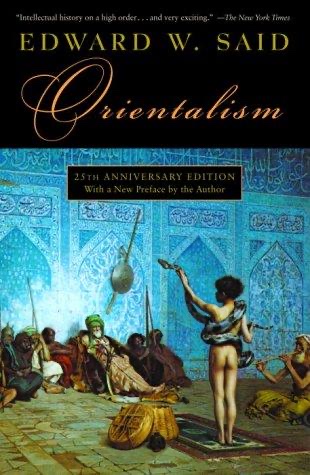
Cover of Orientalism

Orientalism

Edward Said

6 ideas

  1. Orientalism as a discourse of domination

    Orientalism is not just a field of study but a Western style for dominating, restructuring, and having authority over the Orient. Scholars, novelists, travellers, and administrators all fed one shared stock of statements, and that stock defined what could be said about the East at all. In this sense the Orient was not simply described. It was produced as an object that could be known, managed, and governed.

  2. Knowledge about others is never politically innocent

    Scholarship produced inside an imperial society rests on that society's power over its subject. Even specialized philology or textual study builds in the assumptions of the ruler looking at the ruled. The scholar's authority to describe depends on a political relationship the scholar rarely acknowledges, so 'pure' knowledge ends up serving power.

  3. The Other as a mirror of the self

    The West defined itself by building the Orient as its opposite. The East was cast as irrational, sensual, despotic, and timeless, which let Europe see itself as rational, disciplined, free, and progressive.

  4. Imaginative geography creates the regions it names

    Dividing the world into 'ours' and 'theirs' is an act of imagination before it is a fact of geography. Once the boundary is drawn, huge and varied populations get flattened into one essence, and the unfamiliar space gets filled with projected meanings. The map then feels natural, even though it was assembled.

  5. Textual attitude over lived reality

    Orientalists trusted authoritative texts over direct experience. When encounters with actual Eastern people contradicted the books, the books won, and the people were judged as deviations from the textual ideal. Each new text cited earlier ones, so the tradition kept confirming itself and became immune to evidence.

  6. Flaubert and Kuchuk Hanem, the silenced courtesan

    Flaubert's account of the Egyptian dancer Kuchuk Hanem became a template for the Oriental woman as sensual, available, and mute. She never speaks for herself. A wealthy foreign man narrates her, and his dominance gave him the power to represent her. The episode captures the core pattern: the Orient does not represent itself, it is represented.

Save and mark ideas in the app