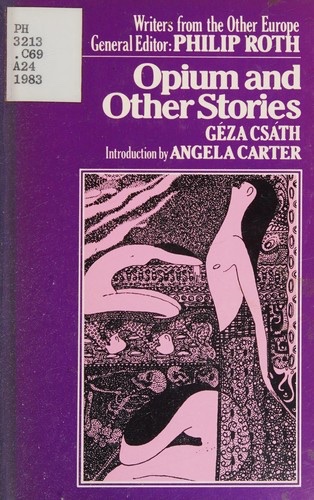
Cover of Opium and Other Stories

Opium and Other Stories

Géza Csáth

4 ideas

  1. A psychiatrist documents his own morphine collapse

    Géza Csáth (József Brenner), a trained Budapest psychiatrist, began taking morphine around 1910 and kept a diary in 1912–13 recording his daily doses, sexual encounters and self-justifications with clinical precision. His professional understanding of addiction did not slow his decline. In 1919 he shot his wife Olga Jónás, escaped from psychiatric custody, and poisoned himself at the Yugoslav border.

  2. Intoxication as an extension of lived time

    In the story 'Opium' the narrator argues that the opium dreamer lives far more subjective life than the sober person, because drug reverie packs years of vivid experience into hours. By this logic, sober, productive existence is the real waste. The argument appeals because it redefines the value of a life as intensity of inner experience rather than duration or achievement.

  3. Childhood cruelty as amoral curiosity

    Csáth depicts children's violence toward animals and each other without moral commentary, treating it as experiment driven by fascination with pain, sex and death rather than by malice. Removing the narrator's judgment makes cruelty look like a natural stage of exploring the world, which unsettles readers more than condemnation would.

  4. Two brothers torture animals, then kill their mother

    In 'Matricide' ('Mother Murder'), the neglected Witman brothers develop a taste for torturing small animals and move on to murdering their own mother to rob her. The story traces a clear line from unsupervised childhood cruelty and emotional deprivation to lethal violence, told in the flat tone of a case report.

Save and mark ideas in the app