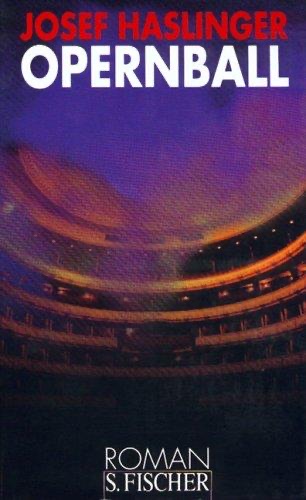
Cover of Opernball

Opernball

Josef Haslinger

4 ideas

  1. Neo-Nazi gas attack on the Opera Ball

    During the live television broadcast of the Vienna Opera Ball, a neo-Nazi cell releases poison gas into the State Opera and kills thousands of guests, staff and crew. Kurt Fraser, a TV journalist whose cameraman son Fred died while filming the event, later reconstructs how it happened. He pieces together testimony from perpetrators, police and other witnesses to learn how the plot formed and why it was not stopped.

  2. Terror staged for the live broadcast

    The attackers time the massacre to a nationally televised ritual so that broadcasting itself carries the terror. Cameras that exist to show glamour instead send death into every living room in real time. The novel argues that live media do more than report spectacular violence. They supply its stage, its audience and its multiplier, which makes broadcasters complicit in the logic of the attack.

  3. Truth assembled from partial witness testimonies

    The catastrophe is told through a montage of first-person accounts from people with different stakes, including the grieving journalist, members of the cell and security officials. Each account is incomplete and self-serving in its own way. The reader has to reconstruct events from the gaps and contradictions between them. The form shows that no single observer holds the truth of a political crime, and that responsibility spreads across many actors who each explain away their part.

  4. Extremist violence grows from tolerated respectability

    The novel presents the neo-Nazi cell as an outgrowth of a society whose everyday xenophobia, historical amnesia and institutional indulgence toward the far right give it cover. Security services and political elites underestimate the threat or tolerate it. That lets a fringe group prepare mass murder in plain sight. The massacre therefore indicts a milieu that treated such ideas as marginal or harmless, not just a few fanatics.

Save and mark ideas in the app