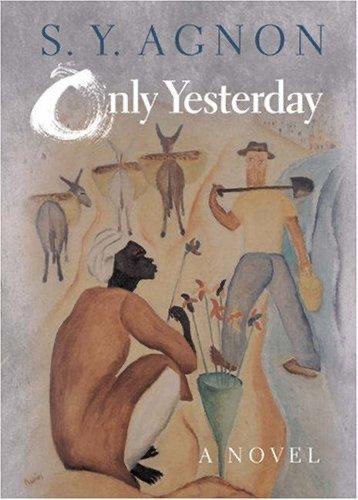
Cover of Only Yesterday

Only Yesterday

S. Y. Agnon

3 ideas

  1. Isaac Kumer and the dog Balak

    Isaac Kumer, a Galician youth, emigrates to Ottoman Palestine around 1908 to work the land but cannot find farm work and becomes a house painter, first in secular Jaffa and then in ultra-Orthodox Jerusalem. On a whim he paints the words 'mad dog' on a stray dog, Balak, so that people flee it, and the dog, driven out everywhere, does go mad and finally bites Isaac, who dies of rabies just after he has married and settled into a pious life. The prank becomes his death: a careless act of naming returns as literal fate.

  2. Drifting between ideologies leaves one belonging nowhere

    Isaac moves between the socialist pioneers of Jaffa and the pious Old Yishuv of Jerusalem without fully committing to either, and each world treats him as an outsider. The novel shows that an ideal held passively, without work that grounds it, gives way to circumstance, lodging and romance. What finally shapes the drifter's life is chance, not conviction.

  3. Ironic fate from trivial acts

    In Agnon's moral universe, small, thoughtless deeds carry disproportionate cosmic weight. Punishment arrives late, through an absurd and indirect route, and it lands on someone whose later life has become decent. This produces tragicomedy: the reader cannot tell whether divine justice, blind chance or a cruel joke is at work, and the narrative deliberately refuses to decide.

Save and mark ideas in the app