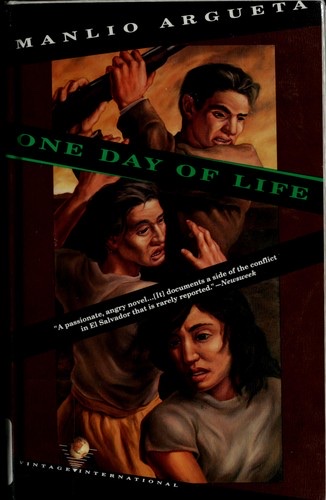
Cover of One Day of Life

One Day of Life

Manlio Argueta

4 ideas

  1. Lupe denies her tortured husband's face

    Over one day in rural Chalatenango, told hour by hour from before dawn to late afternoon, Guadalupe 'Lupe' Guardado recalls her family's history of repression, including the killing of her son Justino. At the climax, rural guards bring a brutally beaten, disfigured man to her door and demand to know if she recognizes him. It is her husband José (Chepe), and she says she does not, knowing that recognition would condemn the rest of the family, and he is taken away.

  2. Religion shifted from resignation to organizing

    The novel shows peasants saying the earlier priests taught them to accept poverty as God's will and wait for reward in heaven. Newer priests shaped by liberation theology taught them to see hunger and exploitation as human-made and changeable. The state then treated this change in religious teaching as subversion, which made priests and catechists targets of violence.

  3. Repressors drawn from the repressed class

    Some chapters are narrated by the guards themselves. They are peasant men who have been trained, partly by foreign instructors, to despise the people they came from. They are given status, weapons, and an ideology that labels their neighbors as communists.

  4. Awareness itself treated as the crime

    In the novel, the guards target peasants for knowing their rights, for organizing cooperatives, and for asking for fair wages, more than for any violent act. Repression is therefore aimed at consciousness. People are punished for understanding why they are poor, and silence and feigned ignorance become strategies for survival. Read this way, Lupe's denial is resistance: she refuses to give the state the recognition it demands.

Save and mark ideas in the app