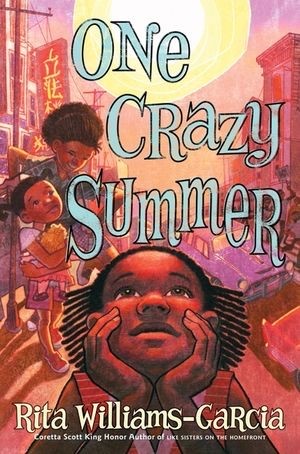
Cover of One Crazy Summer

One Crazy Summer

Rita Williams-Garcia

4 ideas

  1. Three sisters sent to their absent mother

    In summer 1968, eleven-year-old Delphine and her younger sisters Vonetta and Fern fly from Brooklyn to Oakland to stay with Cecile, the poet mother who left them years earlier. Cecile does not want them there. She bars them from her kitchen, where she prints Black Panther flyers, and sends them to a Panther-run People's Center for free breakfast and day camp.

  2. Parentified eldest child loses her childhood

    When a parent is absent or unavailable, the oldest child takes on the parental role: rationing money, settling fights, and managing how outsiders see the family. The role wins adult approval, which makes it hard to set down. The child's growth then means learning to be a child again, to take risks and have fun, instead of acquiring more responsibility.

  3. Respectability versus visibility as survival strategies

    Black families can pass down opposing rules for surviving a hostile society. One rule says to stay quiet and never make a public spectacle, so as not to confirm stereotypes. The other says to assert yourself openly and loudly. Viewed this way, a child's everyday behavior, such as whether to speak up, stay in line, or be seen, becomes a choice between two political strategies she inherited without knowing it.

  4. Radical movements seen through their mundane services

    Seen from the ground by children, a movement that the media portrays as armed and dangerous appears mainly as free breakfast, summer lessons, and neighborhood rallies. The book argues that the public image of a movement and what it actually does in daily life can differ sharply. Direct contact with its everyday community work changes how people judge it.

Save and mark ideas in the app