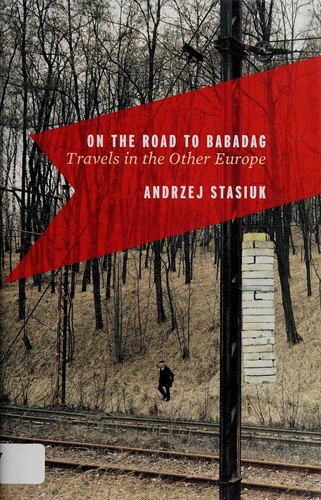
Cover of On the Road to Babadag

On the Road to Babadag

Andrzej Stasiuk

6 ideas

  1. The periphery as the real center

    Stasiuk treats the neglected margins of Europe, such as Danube delta villages, Albanian roadsides and Moldovan towns, as the places where the continent's truth is most visible. At the edges, the machinery of modernity is thin, so time, poverty and endurance show plainly. Looking outward from the margins shows what the prosperous center hides from itself.

  2. Poverty slows time into a durable present

    In the poor east, the absence of capital and ambition makes time stop pointing toward progress. Instead it pools into repetition: men sitting on benches, carts on roads, the same gestures across generations. The book argues this stalled time is not simply deprivation but a different mode of existence that resists the West's future-oriented clock.

  3. Decay as an aesthetic and moral revelation

    Rusting factories, abandoned collective farms and crumbling socialist infrastructure are read as ruins that expose the vanity of grand historical projects. Their decay displays how every ideology, communist and now capitalist, eventually returns to matter, weeds and dust. Attending to this decline becomes a form of honesty about impermanence.

  4. The failed state leaves life to improvise

    Stasiuk presents this not only as failure but as evidence that social life persists beneath and beyond institutions. Order becomes local, personal and provisional.

  5. Travel as purposeless drifting rather than arrival

    The journeys have no destination worth reaching. Value lies in the motion, the petrol stations, bus depots, ferry crossings and landscapes seen through a windshield. Refusing arrival lets the traveler register the ordinary textures that goal-directed travel filters out.

  6. The Roma as Europe's unassimilated remainder

    Stasiuk returns repeatedly to Gypsy settlements and travelers as a people living outside the state's categories, property regimes and historical narratives. They serve as a mirror showing how much of European identity depends on fixed borders, ownership and linear history. Their persistence exposes those structures as contingent rather than natural.

Save and mark ideas in the app