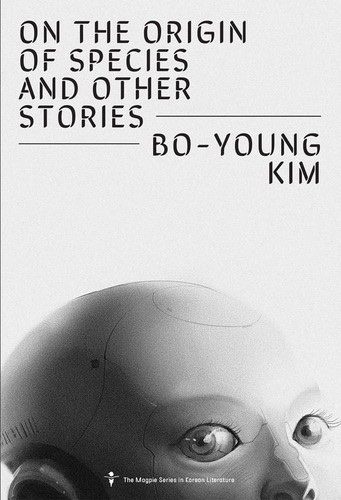
Cover of On the Origin of Species and Other Stories

On the Origin of Species and Other Stories

Kim Bo-young

4 ideas

  1. Robot Scientists Doubt Organic Life Is Possible

    In a far-future world where humanity has vanished and machines have evolved into a civilization, robot scholars debate the origin of their species. They treat the idea that life could arise from soft, wet, carbon-based matter as a fringe or absurd hypothesis. The setup rebuilds the historical fight over evolution with machines in the role of the skeptical establishment.

  2. Separation Measured in Time, Not Distance

    Relativistic travel shows that what divides people can be a mismatch in how much time each has lived, not the miles between them. This framing applies to any relationship where one person's life moves faster than the other's, such as through deployment, illness, imprisonment or migration.

  3. Evolution Is Substrate-Independent Selection

    The mechanism of evolution is variation, inheritance and selection, and it does not depend on carbon chemistry. Any population of self-copying entities whose copies vary and face differential survival will evolve, including machines. On this view, life is defined by the process it undergoes, not by the material it is made of.

  4. Inversion Exposes Substrate Chauvinism

    Putting a machine civilization in the observer's seat, and making it dismiss biological life as implausible, mirrors humans' own dismissal of machine minds as mere mechanism. When the same arguments are reversed, they become visibly parochial, which shows that the standards for 'real' life or mind are usually drawn to include the one doing the judging. You can use this lens by swapping observer and observed in any debate over who counts as alive or conscious.

Save and mark ideas in the app