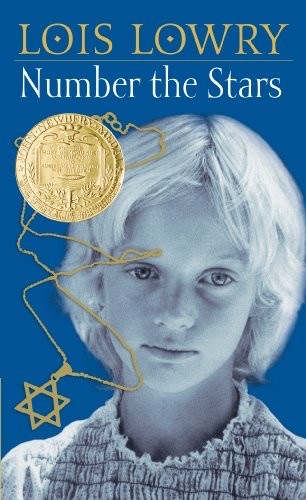
Cover of Number the Stars

Number the Stars

Lois Lowry

4 ideas

  1. Smuggling Copenhagen's Jews across the Øresund

    In September and October 1943, ten-year-old Annemarie Johansen's family hides her Jewish friend Ellen Rosen by passing her off as Annemarie's dead sister Lise, and Annemarie tears off Ellen's Star of David necklace before German soldiers search the flat. The family stages a wake for a fictional 'Great-aunt Birte' so Jews can gather around a coffin filled with blankets and clothing, and Uncle Henrik carries them to Sweden hidden under his fishing boat's deck. The novel reflects the real rescue, in which Danes ferried about 7,000 of the country's Jews to Sweden in a few weeks.

  2. Strategic ignorance as protection for the vulnerable

    Resistance adults deliberately keep children, and sometimes each other, from knowing the full plan. Someone who does not know the truth cannot reveal it under questioning, and can act normally without betraying fear. Uncle Henrik puts it plainly: it is much easier to be brave if you do not know everything.

  3. Mundane objects decide life-or-death moments

    At the climax, what saves the boat is not a weapon or a confrontation. It is a handkerchief treated with a scent that deadens the smell of German search dogs, which Annemarie delivers in a lunch basket while playing a silly little girl. The book argues that ordinary people win resistance by disguising critical tools as everyday things and critical acts as childish errands, so power overlooks them.

  4. The whole nation as bodyguard

    Papa tells the story of a soldier who asked who guards King Christian X on his unescorted rides through Copenhagen, and a Danish boy answered that all of Denmark is his bodyguard. The lens sees protection as a distributed social norm rather than a specialized force. When enough ordinary people quietly refuse to cooperate and take small risks, the whole population together shields the vulnerable in a way no occupier can fully police.

Save and mark ideas in the app