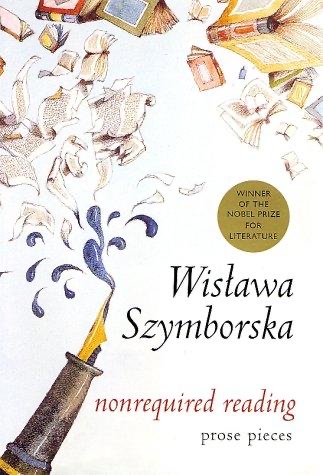
Cover of Nonrequired Reading

Nonrequired Reading

Wisława Szymborska

5 ideas

  1. Minor handbooks as windows into culture

    Books nobody reviews, such as wallpaper guides, bird manuals, etiquette primers and popular histories, reveal a culture's assumptions more candidly than its masterpieces, because they state what ordinary people were expected to know, fear or want. Treating such a book as a pretext rather than an object to judge frees the reader to follow the digression the book provokes.

  2. Hitler's dog in the bunker

    The cyanide intended for the Führer's suicide was first tested on her. Looking at the regime's end through the creature that trusted it exposes how atrocity absorbs even the innocent bystanders closest to its author, and it lets history be seen from below, through the smallest witness.

  3. Reading for pleasure is a legitimate stance

    The amateur reader, who reads for delight and curiosity rather than for professional judgment, is entitled to that stance and is not a lesser one. Reading is a form of play, and its freedom from duty is exactly what lets a reader notice odd details, laugh, and make unexpected connections that a critic bound to evaluate would suppress.

  4. Restoring the individual behind the aggregate

    When a history or reference book speaks in totals, eras and averages, you can stop and imagine one specific person inside the number, such as a soldier, a housewife or a victim. This deliberate shift from mass to particular turns dry information into moral and emotional knowledge without denying the facts.

  5. Wonder at nature's indifference to us

    Birds, insects and other creatures go on according to their own logic, unaware of the meanings, rankings and dramas humans project onto them. Noticing that indifference produces a comic humility: human self-importance shrinks, and ordinary existence becomes astonishing rather than taken for granted.

Save and mark ideas in the app