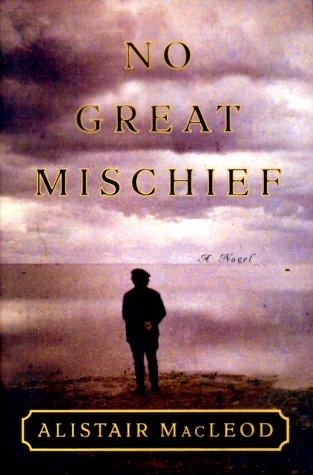
Cover of No Great Mischief

No Great Mischief

Alistair MacLeod

4 ideas

  1. The dog that swam after the boat

    In 1779 Calum Ruadh left the Scottish Highlands for Cape Breton. The family's dog, left behind on shore, swam out after the departing boat until the emigrants hauled it aboard. The clan retells this for two centuries as its founding image: loyalty that follows the family into exile unasked, and that the family feels bound to honour in return.

  2. Calum kills Fern Picard after mine death

    The narrator's older brothers ran a crew of MacDonald shaft-sinkers in the Ontario uranium mines, working beside a rival French-Canadian crew. After the cousin's death, tension with the other crew ended in a fight in which the narrator's brother Calum killed Fern Picard, which sent Calum to Kingston Penitentiary and later to alcoholism in a Toronto rooming house.

  3. No great mischief if they fall

    The title comes from General Wolfe's remark that the Highland soldiers he used at Quebec were hardy and brave, and that it was 'no great mischief if they fall.' The lens is this: those in power value marginal groups for their loyalty and toughness because those traits make them expendable. The same pattern repeats two centuries later, when clan members are sent into the most dangerous mine shafts.

  4. Inherited loyalty as unchosen obligation

    The phrase 'blood is thicker than water' works in the clan as a binding rule, not a sentiment. Being named 'one of Calum Ruadh's people' creates duties that apply whatever a person has earned or chosen. The novel shows this obligation as both what sustains the family and what drags its members into shared fates, including violence.

Save and mark ideas in the app