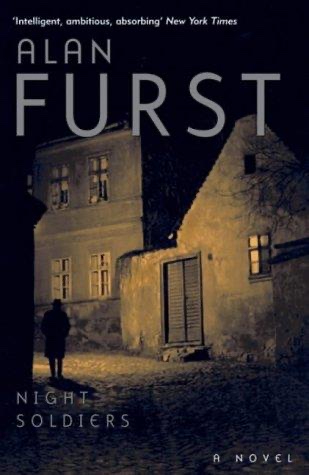
Cover of Night Soldiers

Night Soldiers

Alan Furst

4 ideas

  1. Bulgarian recruit hunted by his own service

    In 1934, after fascist thugs kill his brother in the Danube town of Vidin, young Khristo Stoianev is recruited by the NKVD, trained in Moscow, and sent to the Spanish Civil War. There he watches the service devour its own.

  2. Proximity to secrets makes loyal agents liabilities

    In a paranoid intelligence state, an operative's danger to the regime grows with what he has witnessed, not with any disloyalty. Faithful service in a sensitive operation like Spain produces exactly the knowledge that marks a man for elimination. Loyalty therefore offers no protection; survival depends on reading the purge pattern early and leaving before the recall order arrives.

  3. Recruitment through personal grievance and powerlessness

    Ideological services recruit most effectively at the moment a young person has suffered a concrete injustice and has no local means of redress. The recruiter offers a way to turn private grief into purposeful power. Once the grievance is spent, the recruit is left bound to an organization whose aims were never his own.

  4. Survival as craft amid state collapse

    When states and ideologies turn predatory, individual survival becomes a matter of tradecraft rather than allegiance: papers, languages, small debts of favor, trusted cutouts, and the discipline to trust almost no one. The protagonist's real education is not in the NKVD's doctrine but in the practical skills of vanishing and staying invisible. Those skills outlast every cause he is asked to serve.

Save and mark ideas in the app