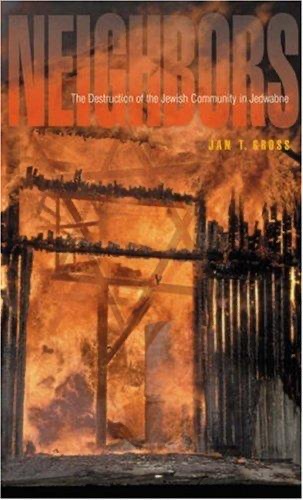
Cover of Neighbors

Neighbors

Jan T. Gross

6 ideas

  1. Read survivor testimony as presumptively true

    Gross argues that historians should reverse their default toward Holocaust survivor accounts. Instead of discarding them until corroborated, treat them as credible unless contrary evidence appears. Many testimonies had been dismissed as emotional or self-interested, and this suspicion erased the victims' view of events and hid local perpetrators.

  2. Jedwabne's Jews burned in a barn

    On 10 July 1941, Polish residents of Jedwabne beat, humiliated and murdered Jewish neighbours through the day. They then forced the remaining Jews into a barn and set it on fire. Gross put the dead at about 1,600.

  3. Occupiers enabled, but neighbours performed the killing

    Gross contends that the German occupiers created the conditions and gave approval, but the town's own Polish residents organized and carried out the murders. The local mayor played a central role, and the killers knew their victims by name. Removing normal legal restraints was enough; the violence came from within the community.

  4. The monument that blamed the Gestapo

    For decades a plaque at Jedwabne blamed the massacre on the Gestapo and Nazi gendarmerie. The whole town knew who had actually done the killing. The official memorial turned a local crime into a foreign one and made the falsehood the permanent public record.

  5. Collaboration stereotype served as retroactive justification

    The myth that Jews as a group had collaborated with the Soviet occupation of 1939–41 was used to justify the massacre, as if it were revenge. Gross points out that non-Jewish Poles also collaborated with the Soviets. Blaming a whole group for the acts of some members made the killing feel deserved, and the chance to take Jewish property added a material motive.

  6. Victim nations can also be perpetrators

    Poland's self-image as a martyred nation, victimized by both Nazis and Soviets, left no room to see Poles as perpetrators. Gross argues that a group can be victim and perpetrator in the same period. Refusing to accept both roles distorts history and blocks moral reckoning.

Save and mark ideas in the app