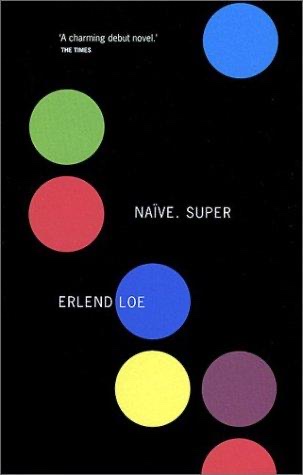
Cover of Naïve. Super.

Naïve. Super.

Erlend Loe

3 ideas

  1. Croquet loss triggers a 25-year-old's collapse

    After losing a croquet game to his older brother at a birthday party, a 25-year-old Norwegian feels everything is suddenly meaningless and quits his university studies. He moves into his absent brother's flat, buys a children's hammer-and-peg toy, bounces a ball against a wall, and writes lists of things he likes and doesn't like. He also befriends a small boy from the neighbourhood. The case shows an existential crisis handled by shrinking life to the physical and the countable rather than by grand solutions.

  2. List-making as a tool for self-inventory

    The narrator sorts his life into plain inventories: things he likes, things he has, what he wants. This turns vague dread into discrete, inspectable items. Writing each preference as a flat, childlike statement strips away the social performance around it and shows what he actually values.

  3. Naivety as a deliberate way of seeing

    Looking at time, money, competition and adulthood as if for the first time exposes how arbitrary many adult obligations are. The narrator's literal, childish questions, such as his fixation on how time works, make ordinary assumptions look strange. That strangeness creates room to choose again rather than continue by default.

Save and mark ideas in the app