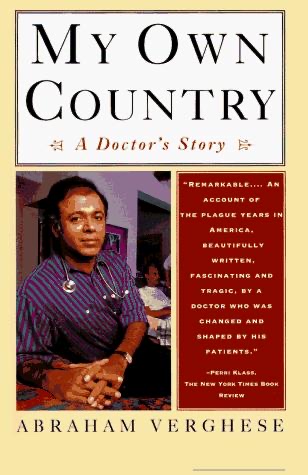
Cover of My Own Country

My Own Country

Abraham Verghese

4 ideas

  1. AIDS comes home to Johnson City

    Over the next few years he became the region's de facto AIDS doctor, following dozens of patients: gay sons coming back to conservative farm families, men infected through blood transfusions, and wives infected by their husbands. His caseload showed that the epidemic was not confined to coastal cities but traveled home along family ties.

  2. Epidemics travel back along homecoming routes

    People who leave small towns for cities often come back home when they fall seriously ill. Their home region therefore inherits a disease that was acquired somewhere else, often without warning or the means to treat it. Tracking where the sick return tells you more about where care will be needed than tracking where infection first happened.

  3. The outsider doctor treating the outcasts

    As a foreign-born physician who never fully belonged in Tennessee, Verghese recognized his gay patients' position as insiders made into strangers in their own home region. His own marginal status gave him both empathy and a kind of permission to care for patients the local establishment avoided. Belonging and exile become the frame for understanding who ends up providing care during a stigmatized crisis.

  4. Presence matters when cure is impossible

    Before effective AIDS treatment existed, a doctor's main tools were attention, time, touch, and the willingness to stay through the dying. The book shows these relational acts as real medicine, restoring dignity to patients and helping reconcile them with their families. It also shows the cost: the doctor's absorption in his patients wore down his own marriage and home life.

Save and mark ideas in the app