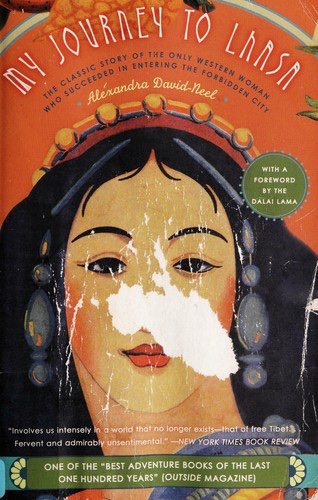
Cover of My Journey to Lhasa

My Journey to Lhasa

Alexandra David-Néel

4 ideas

  1. Fifty-five-year-old woman walks into Lhasa

    In 1923-24 Alexandra David-Néel, aged fifty-five, walked with her adopted son Lama Yongden from Yunnan across eastern Tibet, crossing high snow passes and the little-known Po country in winter. At one point hunger drove them to boil and eat the leather of their boots. She reached Lhasa in early 1924, when the city was closed to foreigners, and lived there about two months as an unremarked Tibetan pilgrim, becoming the first European woman to enter it.

  2. Low status as the best camouflage

    Officials and bandits watch for people with baggage, servants, and money. A ragged beggar-pilgrim falls below what anyone thinks worth checking, so nobody looks closely at her. Poverty therefore gave her cover that no amount of wealth or official papers could have bought.

  3. A disguise is a performed role

    The disguise worked because it fit a role Tibetans already recognized: an old mother on pilgrimage with her lama son. That role explained her presence, her travel, and how others treated her. Dark skin and yak-hair braids were not enough on their own. The real risk came from behavioral slips, such as washing too often, eating the wrong way, or carrying European objects, because these broke the role more surely than her face ever could.

  4. Prohibition turns curiosity into defiant resolve

    David-Néel says that the official ban on foreigners entering Tibet, and her earlier expulsions, made her determined to go rather than stopping her. The journey became a deliberate demonstration that the barrier could be crossed, and that a woman could go wherever she chose. When a closure is felt as an insult, it can create the motivation it was meant to suppress.

Save and mark ideas in the app