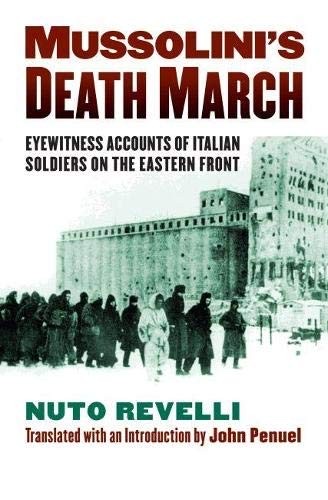
Cover of Mussolini's Death March

Mussolini's Death March

Nuto Revelli

4 ideas

  1. The davai march of Italian prisoners

    After capture in the winter of 1942–43, Italian prisoners were driven on foot across frozen steppe toward rail points and camps while guards shouted 'davai' ('move on'). Men who fell behind from frostbite, dysentery, or exhaustion were abandoned or shot, so the march itself killed many before any camp was reached. The single shouted word became, for survivors, shorthand for the whole experience of captivity.

  2. Unpreparedness was a political crime

    The testimonies present the ARMIR catastrophe as the product of a regime that sent peasant soldiers into a mechanized winter war with inadequate boots, clothing, transport, and weapons. Because those who planned the campaign did not share its costs, the rank and file absorbed the full price of the leadership's propaganda and negligence. Survivors describe feeling betrayed by their own command more than beaten by the enemy.

  3. History told by the defeated rank and file

    Official war histories are written by commanders and states, so they tend to frame defeat in terms of strategy, honor, or bad luck. Recording ordinary soldiers in their own plain words brings out hunger, cold, abandonment, and chance survival, facts that make heroic narratives impossible to sustain. The method treats the losing private's memory as primary evidence, not as color added to an officer's account.

  4. Peasant solidarity across enemy lines

    Many of the Italian soldiers were mountain peasants, and several testimonies describe Russian villagers, often women, giving them food and shelter during the retreat and captivity. The shared condition of rural poverty could outweigh official enmity. In these accounts the soldiers' real alignment follows class and circumstance more than the nationalist categories the war imposed on them.

Save and mark ideas in the app