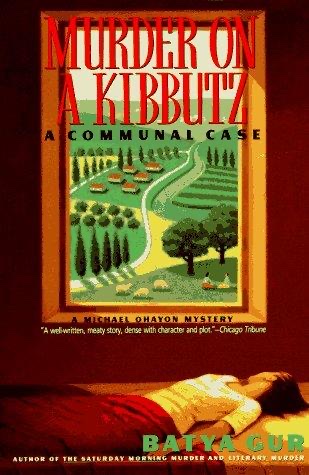
Cover of Murder on a Kibbutz

Murder on a Kibbutz

Batya Gur

4 ideas

  1. Kibbutz secretary poisoned during flu epidemic

    Jerusalem detective Michael Ohayon has to investigate a community whose members share meals, children's houses and property, yet who close ranks against him. He gradually uncovers private affairs, generational grievances and old ideological loyalties that the communal surface had kept hidden.

  2. Collective ideals push conflict underground, not away

    A community that defines itself by shared ownership and mutual trust has no legitimate language for envy, ambition or desire. Those feelings don't disappear. They go unspoken, get redirected into gossip and quiet alliances, and eventually come out in more extreme forms. The more a group insists it has no private interests, the more dangerous its concealed private interests become.

  3. The outsider-investigator as institutional X-ray

    Put an outsider who owes nothing to the institution's founding myths into a closed world, and everything members treat as natural becomes visible as a choice. Ohayon is a Moroccan-born Jew among a largely Ashkenazi founding culture, and his questions expose which norms are enforced, who guards them, and what the group will sacrifice to preserve its self-image. The method treats each enclosed institution as a sample of the wider society.

  4. Founding generation as guardians turned threat

    The generation that built an institution around an ideal comes to see that ideal as its own identity, not as a tool that can be revised. When younger members push for change, a founder can treat reform as an existential attack on everything they sacrificed for. Loyalty to the original vision then becomes a motive for harm, turning preservation into violence.

Save and mark ideas in the app