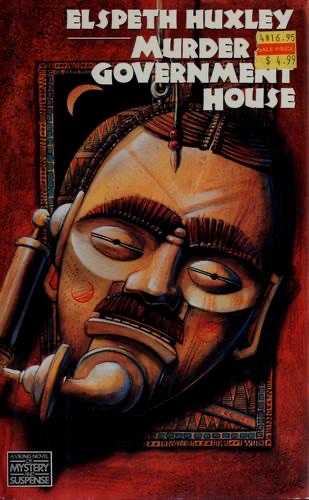
Cover of Murder at Government House

Murder at Government House

Elspeth Huxley

4 ideas

  1. Governor strangled at his Government House desk

    In the fictional East African colony of Chania, modelled on 1930s Kenya, the governor is found strangled at his desk inside his own official residence, the most guarded building in the territory. A police officer must investigate a suspect pool drawn from the governor's staff, officials and settler guests. The case shows how the killing of the colony's apex authority forces an inquiry into the people who run the colony.

  2. Anthropologist's gaze turned on the colonizers

    An anthropologist trained to study African societies turns the same fieldwork habits on the British officials and settlers: their taboos, status rituals, kinship-like alliances and gossip. Treating the ruling class as a tribe with its own customs exposes motives that its members take for granted and so cannot see.

  3. The colony as a closed circle

    The sealed country house of the classic whodunit is enlarged into an entire settler society. It is a small, interdependent elite where everyone knows everyone, owes someone, and has something to hide. Because careers, land and reputations are all tied to the governor's favour, nearly every member of the circle has a plausible stake in his death.

  4. Rank determines who is suspected and believed

    In a rigidly stratified colonial order, precedence and race shape an investigation before any evidence does. Senior officials' accounts are presumed credible, while servants and Africans are either overlooked or suspected by default. The detective has to discount this built-in bias in testimony to reach the truth, which makes social hierarchy itself an obstacle to justice.

Save and mark ideas in the app