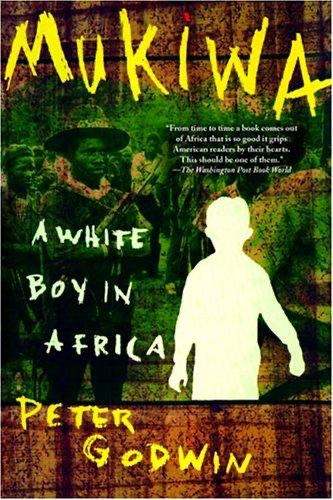
Cover of Mukiwa

Mukiwa

Peter Godwin

4 ideas

  1. Reporting Gukurahundi and being declared an enemy

    After independence, Godwin returned to Zimbabwe as a journalist and documented the Fifth Brigade's killings of civilians in Matabeleland in the early 1980s, finding mass graves and survivors' testimony. The episode is a concrete case of a liberation government, lionized abroad, silencing the press to hide atrocities against a rival ethnic and political base.

  2. The war begins next door: Oberholzer's killing

    In 1964 a nationalist group ambushed and killed Petrus Oberholzer, a white farmer near Melsetter in the Eastern Highlands close to the Godwin home. The killing is widely treated as the opening act of the Rhodesian Bush War. For a young white boy, it turned a distant political conflict into a local, domestic fear, and it shows how settler communities first met armed resistance as a personal intrusion rather than as a political grievance.

  3. Being named by the people you live among

    'Mukiwa' is the local Shona word for a white person, and the title uses the label the Black majority gave Godwin rather than any name white Rhodesians used for themselves. The mechanism is this: a settler's sense of belonging, rooted in birthplace, landscape and childhood, sits alongside a category that marks them as outsiders. Belonging is therefore contested between how you feel and what the surrounding society calls you.

  4. A privileged childhood feels normal from inside

    Godwin's boyhood of farms, servants, boarding school and adventure seemed ordinary to him, and he only saw its political foundations later, after he had been conscripted to defend it. The cocoon was sustained because the unequal order was never presented as a choice. It came as the natural texture of daily life, so ordinary young men were drafted into defending minority rule before they had examined it.

Save and mark ideas in the app