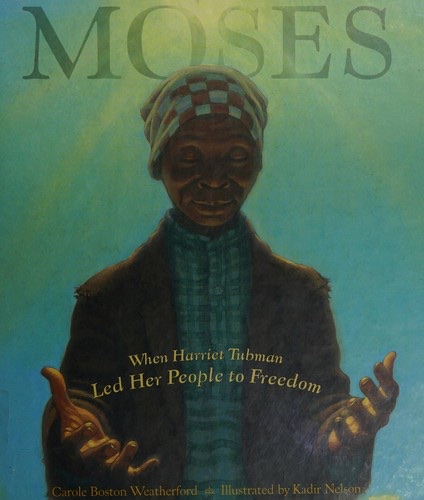
Cover of Moses

Moses

Carole Boston Weatherford

4 ideas

  1. Tubman's solitary escape from Maryland slavery

    Hearing she is to be sold, Harriet Tubman flees a Maryland plantation alone around 1849. On crossing into Pennsylvania she feels free, then resolves to go back south to lead others out, which earns her the name 'Moses.'

  2. Courage framed as dialogue with God

    The book renders Tubman's decisions as a call-and-response between her own voice and God's, with each voice set in its own typeface. Framed this way, what looks like individual daring becomes obedience to a felt calling. Fear is not overcome by nerve but handed over through prayer, and each risky next step waits on an answer.

  3. Personal freedom obligates returning for others

    The book presents Tubman's own liberation as incomplete while her family and people stay enslaved. Freedom reached alone creates a duty to go back into danger and bring others out. It argues that liberation is only fully realized when it is extended to others.

  4. Networks of strangers enable escape

    Tubman's escape depends on a chain of hidden helpers, each of whom knows only the next safe house. Every stranger she approaches must be trusted before she can know whether they will help or betray her. The route to freedom is built from many small, risky acts of shelter, not from one person's heroism alone.

Save and mark ideas in the app