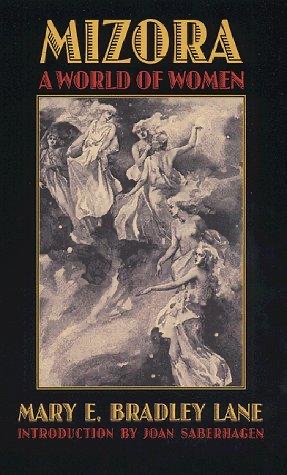
Cover of Mizora

Mizora

Mary E. Bradley Lane

4 ideas

  1. Vera Zarovitch's descent into Mizora

    Vera Zarovitch, a Russian noblewoman exiled to Siberia for political offenses, escapes and sails into the open polar sea, where an Arctic opening carries her into Mizora, an interior world populated only by fair-haired women. Guided by a young Mizoran named Wauna and taught by a Preceptress, she learns that men died out some 3,000 years earlier and that the women now reproduce without them. She eventually returns to the surface with Wauna, but her attempt to carry the utopia's lessons home fails.

  2. Universal state-funded education drives civilizational progress

    Mizora's advances in science, health and abundance come from treating education as the state's highest duty. Schooling is free, lifelong and open to everyone, and teachers hold the most honored rank in society. The book argues that once every mind is fully developed, poverty, crime and disease disappear as problems of ignorance rather than fate.

  3. Technological abundance dissolves labor and scarcity

    Mizorans synthesize food chemically from basic elements, harness electricity and other clean power, and have engineered away disease and drudgery. Survival no longer depends on toil or competition over resources. Because of this, the society can organize around cooperation, cleanliness and intellectual pursuit.

  4. Utopian perfection built on eugenic exclusion

    Mizora's harmony depends on deliberate elimination. Men disappeared after being blamed for war and vice, and the women deliberately bred out darker complexions, so every inhabitant is blonde and fair. Reading the society through what it removed reveals that its 'perfect' uniformity is produced by erasing whole categories of people. The same pattern exposes the racial and exclusionary assumptions embedded in progressive visions of an ideal society.

Save and mark ideas in the app