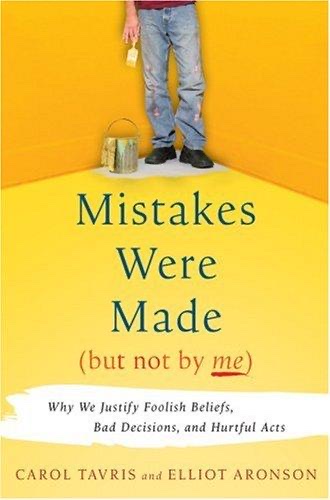
Cover of Mistakes Were Made (but Not by Me)

Mistakes Were Made (but Not by Me)

Carol Tavris and Elliot Aronson

6 ideas

  1. The Pyramid of Choice

    Two people who start with nearly identical attitudes can end up far apart after one small decision. Each justifies the choice they made, which pushes their beliefs further from the path they rejected. Small first steps, like cheating once on an exam, become the base of a self-reinforcing slide toward either integrity or corruption.

  2. Self-Justification Protects Self-Concept, Not Reputation

    Self-justification is not the same as lying to others. It is an automatic internal process that lets people believe they acted rightly, so their image of themselves as competent, moral and smart stays intact. The people most sure they are good are often the least able to see their own harmful acts, because admitting them would clash with that self-image.

  3. Memory as Self-Serving Historian

    Memory rewrites the past to fit our present beliefs and the story we tell about ourselves. Confidence and vividness do not show that a memory is accurate. This is how false memories, including recovered-memory claims of abuse, can feel completely real to the person who holds them.

  4. Prosecutors Who Cannot Accept Exoneration

    When DNA evidence clears a convicted person, prosecutors and detectives often invent new theories of the crime rather than admit they jailed an innocent person. Admitting the error would conflict with their identity as people who protect the innocent. So the stronger the proof of error, the harder some of them dig in, and the system's inability to correct itself comes from dissonance, not only from bad incentives.

  5. Blame Spirals in Marriage

    Couples in conflict tend to explain their partner's bad behavior as a flaw of character ("you are selfish") and their own bad behavior as a response to circumstances ("I was stressed"). Each side's self-justification provokes the other's, until contempt replaces a specific complaint about behavior. Seeing a fight as two people each defending their self-image, rather than as a clear victim and villain, changes how the conflict can be repaired.

  6. Conflicts of Interest Blind Honest Professionals

    Doctors, scientists and other experts who accept gifts or funding from interested parties honestly believe they are unbiased. That belief is exactly what makes the bias invisible to them. Each small concession gets justified, so their judgment drifts without their noticing, and disclosure rules fail because the person with the conflict cannot see its effect.

Save and mark ideas in the app