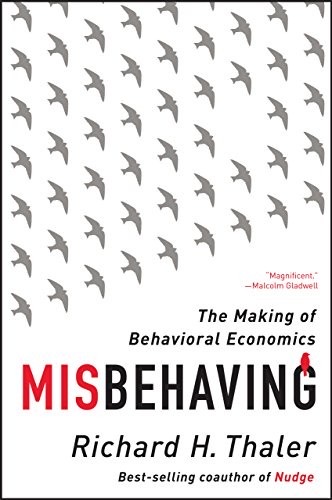
Cover of Misbehaving

Misbehaving

Richard Thaler

4 ideas

  1. Supposedly irrelevant factors change real choices

    Rational-agent theory says features like sunk costs, default options, or how a price is framed should not affect decisions, yet they reliably do. Thaler calls these 'supposedly irrelevant factors' (SIFs) and treats each one as an anomaly that the standard model cannot explain. Behavioural economics then models how actual humans, not idealised 'Econs', respond to them.

  2. Mental accounting breaks money's fungibility

    People sort money into separate mental budgets based on its source and intended use, such as windfall versus salary or entertainment versus groceries. They then spend from each account by different rules, even though a dollar is interchangeable with any other dollar. So a person may carry high-interest credit card debt while keeping a low-interest savings account untouched, or spend 'house money' gains more freely than earned income.

  3. The Chicago cab drivers' daily income targets

    Research by Camerer, Babcock, Loewenstein and Thaler found that New York City cab drivers set a daily earnings target and stop once they reach it. As a result they work fewer hours on busy, high-wage days and more hours on slow days, which is the opposite of what maximising income per hour of effort would require. The case shows reference points and narrow daily bracketing overriding the standard labour-supply prediction.

  4. Save More Tomorrow uses biases for good

    Save More Tomorrow (SMarT), designed with Shlomo Benartzi, asks employees to commit now to raising their retirement contribution rate at future pay raises. This defeats present bias, because the sacrifice is in the future, and loss aversion, because take-home pay never falls. Inertia then keeps people enrolled. In the first implementation, savings rates roughly quadrupled over a few years, which became a template for choice architecture and nudge-based policy.

Save and mark ideas in the app