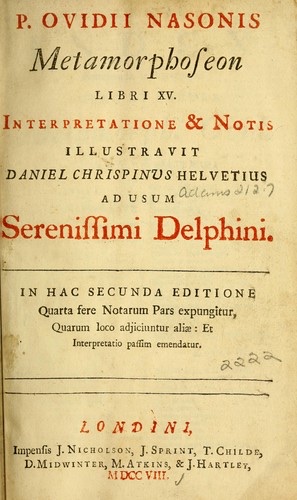
Cover of Metamorphoses

Metamorphoses

Ovid

4 ideas

  1. Pygmalion's ivory statue comes alive

    In Book 10, the Cypriot sculptor Pygmalion is disgusted by the Propoetides, women whom Venus had turned into the first prostitutes and then into stone, so he renounces real women. He carves an ivory woman more perfect than any living one, falls in love with her, dresses her, gives her gifts, and lays her on cushions. At Venus's festival he prays for a wife 'like' his ivory maiden; when he kisses the statue at home it warms and softens like wax under his thumb, and becomes a living woman who wakes to see her lover and the sky at the same moment.

  2. The made lover as retreat from people

    Pygmalion's ideal woman is not an embrace of love but a flight from real women, whom he judges flawed after seeing the Propoetides. The artifact is built to fit his disgust and his standards, so the beloved is designed to have no history, no will, and no capacity to disappoint.

  3. Art so real it hides art

    Ovid says Pygmalion's statue seemed alive and wanting to move, because 'art lies hidden by its own art' (ars adeo latet arte sua). The sculptor is deceived by his own skill. Perfect craft erases the evidence of making, and that erasure is what lets the maker treat his creation as an independent other and love it.

  4. Devotion rewarded converts object into person

    In this episode transformation is a reward, not a punishment. Pygmalion's piety toward Venus and his tender, ritual attention to the statue, including touching, gifting, and a prayer so modest it asks only for a woman 'like' her, are what the goddess answers with life. Love enacted through sustained care is shown as the force that crosses the line from matter to flesh, as the ivory yields under his touch the way wax is worked into use.

Save and mark ideas in the app