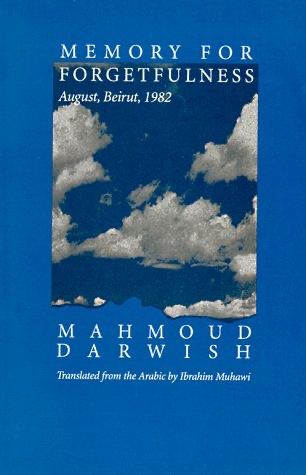
Cover of Memory for Forgetfulness

Memory for Forgetfulness

Mahmoud Darwish

4 ideas

  1. Making coffee under Beirut's bombardment

    On 6 August 1982, Hiroshima Day, during the Israeli siege of Beirut, Darwish wakes to shelling from sea, air and land and resolves to make coffee in his apartment. To reach the stove he must cross a kitchen exposed to fire from ships offshore, and he risks the walk because the slow ritual of boiling, stirring and pouring is the only way left to claim an ordinary morning. The day's reflections on exile, the PLO's impending evacuation, and the city's collapse all unfold from this one act.

  2. Coffee ritual as reclaimed autonomy

    Coffee is a ritual that must be made slowly, by one's own hands, in silence and in the morning. Doing it under bombardment keeps one small sequence of time in the person's own control. The ritual matters because its pace and order refuse the tempo set by the attacker.

  3. Memory fights imposed and chosen forgetting

    The title's paradox is that memory is written for forgetting. The exile records the present in order to survive an unbearable day and let it pass. The record also stands against a victor who wants the people's history forgotten. Remembering and forgetting are both tools the dispossessed use to endure, and whoever controls which one prevails controls the narrative of the homeland.

  4. Exile as serial loss of shelter

    Darwish frames Beirut as another temporary homeland the Palestinian is again being expelled from. This shows exile as a repeating pattern in which each refuge becomes a new site of eviction, not a single departure. Seen this way, siege, evacuation and displacement become one continuous condition rather than separate events.

Save and mark ideas in the app