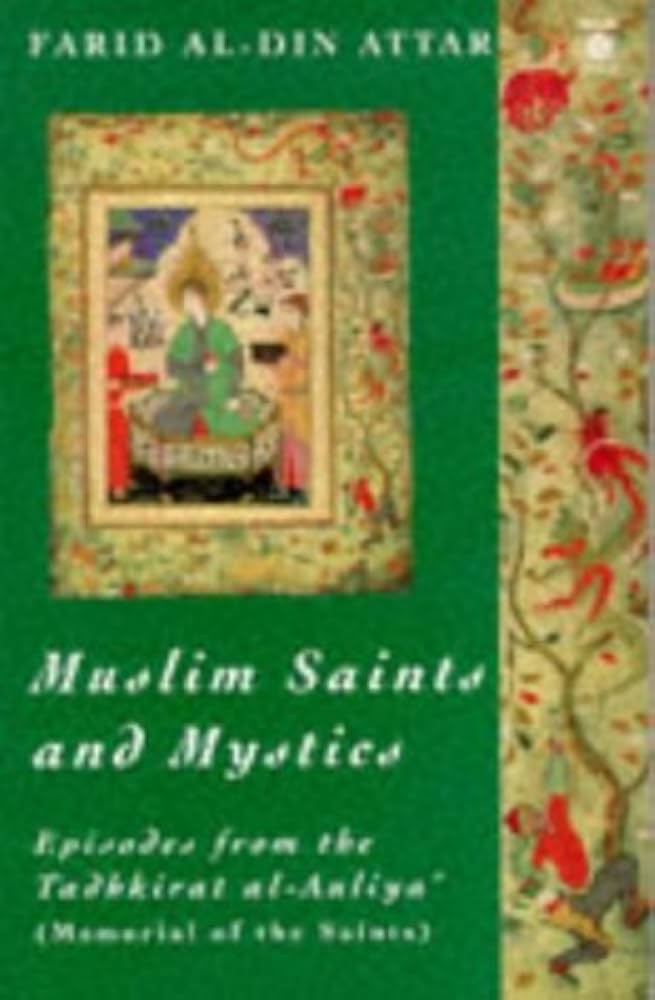
Cover of Memorial of the Saints

Memorial of the Saints

Iran · 8th century – 10th century

4 ideas

Buy on Amazon

Attar collects the lives, miracles and sayings of early Sufi saints, each told as an anecdote followed by the saint's teaching, from Ja'far al-Sadiq to al-Hallaj.

  1. Rabia's torch and bucket of water

    Rabia runs through Basra carrying a torch in one hand and water in the other, saying she means to burn paradise and drown hell. With both reward and punishment removed, people would have to worship God for His own sake rather than from greed or fear. The anecdote argues that devotion driven by incentive is really self-interest.

  2. Searching for camels on palace roof

    King Ibrahim ibn Adham hears footsteps on his roof at night and finds a man who says he is looking for a lost camel. When the king says that is absurd, the man answers that seeking God while lying on a royal bed is just as absurd.

  3. Annihilation of self in the divine

    Fana is the state in which the ego is so fully erased that only God remains as the speaker. On this view, al-Hallaj's 'I am the Truth' and Bayazid's 'Glory be to me' are not blasphemous boasts. They are what is left when there is no longer a separate 'I' to make a claim, and Hallaj's execution shows what that erasure cost in public.

  4. Life story as proof of saying

    Each saint's teaching comes only after an account of how he or she lived: repentance, poverty, trials, miracles. The sayings get their authority from the conduct that came before them, not from argument.

Save ideas and give them a thumbs up or down in the app