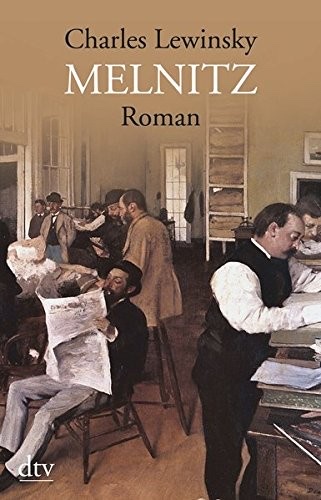
Cover of Melnitz

Melnitz

Charles Lewinsky

4 ideas

  1. The Meijers of Endingen, 1871–1945

    Salomon Meijer, a cattle dealer, lives in Endingen in the Surbtal, one of two Aargau villages where Swiss Jews were for generations the only Jews allowed to settle. In 1871 a young relative, Janki, arrives from the Franco-Prussian War, marries into the family, and opens a fabric shop in nearby Baden. The novel follows this move from village cattle trading to town commerce, Zurich, and assimilation over four generations up to 1945, when a neutral Switzerland is surrounded by Nazi Europe.

  2. Persecution memory as an undying relative

    Uncle Melnitz is a dead relative who returns at funerals and in quiet moments to recite the history of pogroms, expulsions and accusations against Jews. He personifies collective memory as a family member who cannot be buried. He grows stronger when the outside world turns hostile, so inherited fear works less as a recollection of the past than as a live forecast the family cannot switch off.

  3. Legal emancipation relocates exclusion rather than ending it

    Formal civil rights for Swiss Jews in the 1860s and 1870s removed legal barriers to residence and trade. Hostility then moved into social exclusion, business boycotts and popular votes, such as the 1893 ban on kosher slaughter. Equality on paper can coexist with a majority that keeps drawing the old boundary through informal and democratic channels.

  4. Assimilation as a bargain the majority won't honor

    The majority keeps classifying them as Jews regardless, and economic success can make them more visible rather than less. Read this way, assimilation is a one-sided transaction: the minority pays in full, but the terms of belonging stay with the majority.

Save and mark ideas in the app