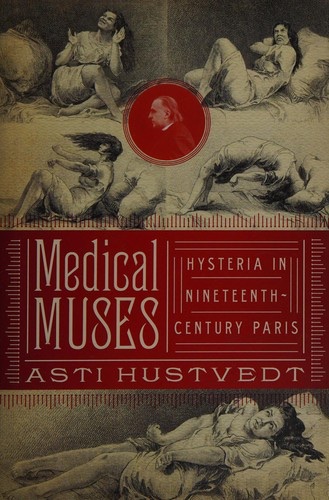
Cover of Medical Muses

Medical Muses

Asti Hustvedt

4 ideas

  1. Augustine, photographed hysteric who escaped

    Augustine Gleizes entered the Salpêtrière as a teenager in 1875, and her convulsive 'passionate attitudes' were photographed and published in the hospital's Iconographie photographique, making her the visual emblem of Charcot's hysteria. After years as a displayed specimen, and with her attacks growing more violent, she escaped the hospital in 1880 disguised as a man. Her story shows a patient whose illness was turned into a public spectacle, and who reclaimed control by leaving in disguise.

  2. Hysteria was co-produced by doctor and patient

    The symptoms of Charcot's star hysterics were not just discovered but partly shaped by the hospital: hypnosis, repeated demonstrations, and physicians' expectations taught patients which attacks and poses counted as proper hysteria. Patients who performed the disease convincingly gained status, attention, and privileges over ordinary inmates. The result was a feedback loop in which the diagnosis produced the symptoms that confirmed it.

  3. Read the specimen back into a person

    Clinical records, photographs, and lecture transcripts present patients only as bundles of symptoms, which erases their families, poverty, sexual trauma, and ambitions. Reading those same documents against the grain for biography reveals that behaviour labelled pathological often responded to real abuse, confinement, and the incentives of institutional life. What looks like a disease entity then becomes a set of human choices and injuries.

  4. The medical muse as performer-collaborator

    Charcot's celebrated patients worked as muses: public lecture demonstrations and images of them drew physicians, artists, and writers, and helped make his reputation. The muse role cut both ways: it gave these women a career and fame, and it made them into exploitable material.

Save and mark ideas in the app