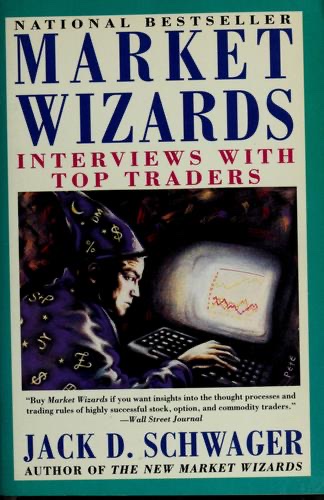
Cover of Market Wizards

Market Wizards

Jack D. Schwager

5 ideas

  1. Richard Dennis's Turtle trader experiment

    Richard Dennis bet his partner William Eckhardt that trading could be taught rather than being innate. He recruited novices through newspaper ads, trained them for about two weeks in a mechanical trend-following system, and gave them real money. Many became highly profitable, which Dennis cites as evidence that trading success comes from rules and discipline more than instinct.

  2. Size positions by the tolerable loss

    Position size is set by how much capital you can afford to lose on a trade, not by how confident you feel. Larry Hite's rule is to never risk more than 1% of total equity on a single trade.

  3. Profits come from asymmetric exits, not accuracy

    Top traders are often right on fewer than half their trades. They profit by defining in advance the price at which the trade idea is proven wrong, exiting there without negotiation, and letting winning positions run. Paul Tudor Jones describes playing defense first and cutting size or getting out entirely when a position is going against him.

  4. Everybody gets what they want from markets

    Ed Seykota argues that trading outcomes reveal the trader's actual motives, not their stated goals. A trader who keeps losing may be satisfying hidden needs such as excitement, self-punishment, or proving a point. On this view, fixing results means examining those motives rather than searching for a better indicator.

  5. Trade journals separate error from noise

    Keeping a written record of each trade, including the reason for entry, the planned exit, and what actually happened, turns vague impressions into data. Reviewing the record shows whether losses came from breaking your own rules or from ordinary market randomness.

Save and mark ideas in the app