Major Gentl defends Achimota City
The war mixes futuristic weaponry with ancestral spirits, animate landscapes and absurd bureaucracy. Victory depends as much on the city's communal wit and improvisation as on firepower.
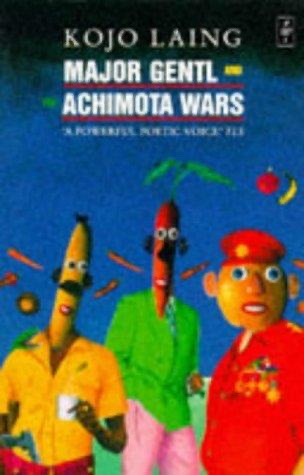
In an imagined future Accra, Major Gentl helps defend Achimota amid a struggle over power. Kojo Laing tells the story as speculative satire, using invented language shaped by English and Ghanaian influences. The conflict asks what future this community can make for itself.
The war mixes futuristic weaponry with ancestral spirits, animate landscapes and absurd bureaucracy. Victory depends as much on the city's communal wit and improvisation as on firepower.
Laing welds English to Twi and Ga and invents new compound words. This lets a colonised speech community describe its own future on its own terms instead of inheriting modernity in borrowed vocabulary.
The novel imagines a future in which advanced technology and the spiritual, ancestral world coexist on equal footing. This inverts the developmental assumption that progress means shedding tradition. Read this way, a society's future is measured by how it carries its cosmology forward alongside new tools, not by how closely it copies another society's modernity.
Major Gentl's name and conduct frame gentleness, humour and play as military assets rather than weaknesses. Against Torro's grasping, humourless greed, the defenders win by staying humane and adaptable. The satire implies that a community's capacity for laughter and tenderness is what predatory power cannot absorb or buy.