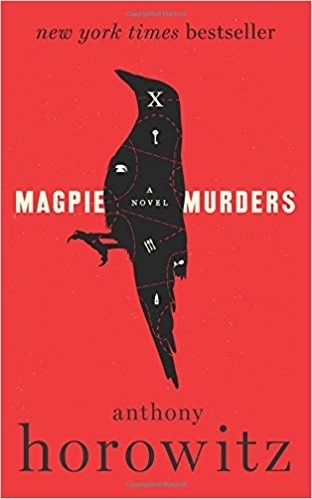
Cover of Magpie Murders

Magpie Murders

Anthony Horowitz

4 ideas

  1. The Editor Who Killed His Bestseller

    Alan Conway, author of a lucrative 1950s-style detective series, falls from his house tower, and a letter written for another purpose is misread as a suicide note. Editor Susan Ryeland finds that her own boss, publisher Charles Clover, killed him. Conway had planned to publicly reveal that his detective's name, Atticus Pünd, was an anagram of an obscene insult to his readers, and that revelation would have destroyed the series his firm depended on.

  2. Contempt Encoded Inside Commercial Work

    A creator who resents the popular work that pays him can hide his contempt inside it through anagrams, acrostics and names borrowed from real people he disliked. The hidden layer is harmless while it stays hidden. Revealing it can wipe out the work's value, because readers' affection depends on believing the creator shares it.

  3. Fiction as Evidence of Its Author

    Treat a novel as a crime scene rather than an escape. Place names, character traits, grudges and structural choices are the author's real life leaking through, and they can be decoded to reconstruct his relationships and enemies. Susan solves the real murder mainly by reading the manuscript for what it reveals about Conway, not for its plot.

  4. Fair-Play Puzzles Hinge on Withheld Endings

    A Golden Age whodunit gives the reader every clue but saves the meaning of those clues for the final revelation. Without that last chapter, the whole book turns into an open problem that any reader could in principle solve.

Save and mark ideas in the app