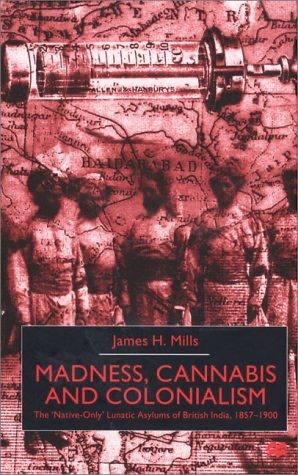
Cover of Madness, Cannabis and Colonialism

Madness, Cannabis and Colonialism

James Mills

6 ideas

  1. Admission paperwork manufactured cannabis insanity statistics

    Asylum records attributing insanity to cannabis came mostly from police and magistrates who filled in the 'cause' field on committal forms, often writing 'ganja' simply because the person was known to smoke it. Superintendents copied these attributions into annual reports, so the statistics reflected bureaucratic habit and suspicion rather than medical findings.

  2. Colonial knowledge as circular administrative artifact

    Read colonial 'facts' by tracing how they were produced: who filled in the form, what categories were available, and who needed the answer. Once an assumption such as 'cannabis causes madness' is built into a form and aggregated into a report, it returns as apparently independent evidence for the original assumption.

  3. Hemp Drugs Commission dismantles asylum evidence

    After questions in the British Parliament about hemp drug use, the Indian Hemp Drugs Commission of 1893–94 examined asylum case records. It found that many 'ganja insanity' diagnoses rested on hearsay and flimsy attribution. The inquiry showed that the statistical basis for the cannabis–insanity link was largely unfounded, even though the belief had shaped policy and reports for decades.

  4. Native asylums served public order more than cure

    Admissions to the asylums for Indians were driven mainly by police removing people who were violent, vagrant or publicly disruptive, not by families seeking treatment. The institutions therefore functioned as instruments of colonial social control and managed visible disorder in towns, while treating only a tiny fraction of India's mentally ill.

  5. Racially segregated colonial asylum system

    British India maintained separate 'native-only' asylums for Indians, while European lunatics were largely kept apart and repatriated to Britain. This separation let officials run Indian asylums cheaply and under different standards. It also embedded racial difference in how insanity among Indians was classified and explained.

  6. Inmates actively shaped and resisted asylum regimes

    Asylum patients were not passive objects of colonial power. They refused labour and diets, escaped, negotiated with staff, and sometimes used the institution for their own ends. Families also contested or exploited committal. Their actions limited what superintendents could impose and show that colonial institutions were shaped from below as well as above.

Save and mark ideas in the app