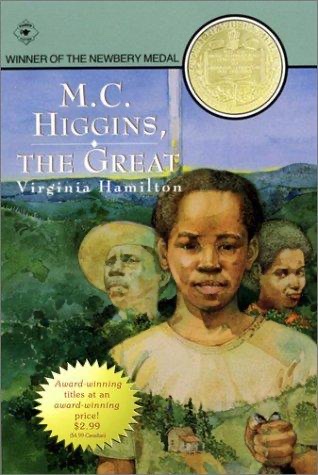
Cover of M.C. Higgins, the Great

M.C. Higgins, the Great

Virginia Hamilton

4 ideas

  1. Boy builds a wall below slag

    Thirteen-year-old M.C. Higgins sits atop a forty-foot steel pole on Sarah's Mountain in Ohio, land his family has held since his great-grandmother Sarah, an escaped slave, settled there. Above the house, a strip-mining spoil heap creeps downhill, and his father Jones refuses to see the danger. M.C. first hopes a visiting song collector will record his mother's voice and make her a star so the family can leave.

  2. Rescue fantasies delay action on danger

    When a threat feels too large to face, people hand the solution to an outside savior, such as a stranger with a tape recorder or a promised fortune. The fantasy feels like a plan, so it keeps them from acting while the danger grows. Real agency begins only when the fantasy breaks and the person uses the materials within reach, even if those means are small.

  3. Land as ancestry, not real estate

    For families whose ancestors took refuge on a piece of land, leaving means abandoning the dead, the family's story, and proof that they survived. It is not simply choosing a safer address. Seen this way, a stubborn refusal to flee an obvious hazard is loyalty to lineage rather than plain irrationality. That loyalty can be turned into protecting the place instead of either staying passively or running away.

  4. Elevated vantage as both freedom and isolation

    M.C.'s pole lets him survey the whole valley and feel above his circumstances. The same height also exposes him and keeps him apart from the people and neighbors below. The novel treats this perch as a stage of youth: seeing far is needed to imagine escape, but change requires coming down and working with his hands on the ground.

Save and mark ideas in the app