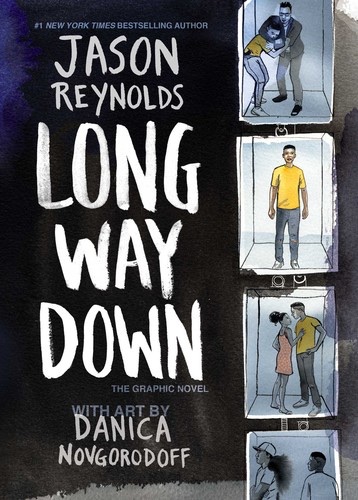
Cover of Long Way Down

Long Way Down

Jason Reynolds

4 ideas

  1. Will Holloman's sixty-second elevator ride down

    Fifteen-year-old Will Holloman takes his murdered brother Shawn's gun from a dresser drawer and rides his building's elevator down, intending to kill the man he believes shot Shawn. At each floor a ghost boards, including Buck, the older mentor who gave Shawn the gun; Dani, a childhood friend killed by a stray bullet; Will's uncle and father; and finally Shawn. Each ghost is part of an interlocking chain of killings and revenge, and the book ends with Will reaching the lobby and his decision left unresolved.

  2. The Rules as an inherited honor code

    Taken together, the rules block grief, outside justice and restraint, so retaliation becomes the only permitted response to loss. Because each generation passes them on as wisdom, obeying them feels like loyalty to the dead rather than a choice.

  3. Retaliation produces the next victim

    The book argues that revenge killings do not close a cycle of violence; each one creates new grieving relatives who are bound by the same code. The ghosts show that yesterday's avenger is today's target, so the man Will means to shoot is only one link in a chain that already includes his own family. A killing that feels like the final act is really the start of the next death.

  4. Hearing from the dead before acting

    The ghosts do not lecture or forbid Will; they ask questions and let him see the outcomes of the path he is on, including how their own stories ended. Moving the decision into a confined space with only the time an elevator takes to descend replaces the momentum of grief with the testimony of people who already followed the rules to their end. Seen this way, a person's choice to act violently is shaped by which voices they hear at the moment they decide.

Save and mark ideas in the app