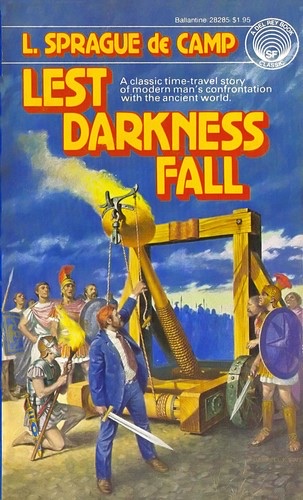
Cover of Lest Darkness Fall

Lest Darkness Fall

L. Sprague de Camp

4 ideas

  1. Padway's bid to avert the Dark Ages

    Archaeologist Martin Padway is transported to Rome in 535 AD, just before Justinian's reconquest war devastates Italy. He borrows from the Syrian banker Thomasus and funds himself by distilling brandy. He goes on to introduce Arabic numerals, double-entry bookkeeping, a printing press, a newspaper and a semaphore telegraph, and he maneuvers among Gothic kings until he captures Belisarius and becomes the effective power behind the Ostrogothic throne.

  2. Inventions succeed only if the base supports them

    An idea from an advanced society succeeds only when the existing materials, craft skills and paying demand can support it. His brandy, presses and bookkeeping work because they recombine techniques local artisans already have, and they sell immediately. Knowing that something is possible matters less than knowing what the surrounding economy can actually build and buy.

  3. Collapse prevented by spreading information

    He prioritizes printing, newspapers and signal telegraphs because they multiply copies of knowledge and speed coordination. That makes learning too widely distributed to be lost when any single city, library or regime falls.

  4. Private builders are forced into politics

    Padway wants only to run his businesses, but war, arbitrary rulers and court intrigue keep threatening everything he has built. To protect his ventures, he is pulled step by step into choosing kings, running a government and commanding armies. When institutions are unstable, anyone who builds something valuable must eventually either shape political power or lose what they built to it.

Save and mark ideas in the app