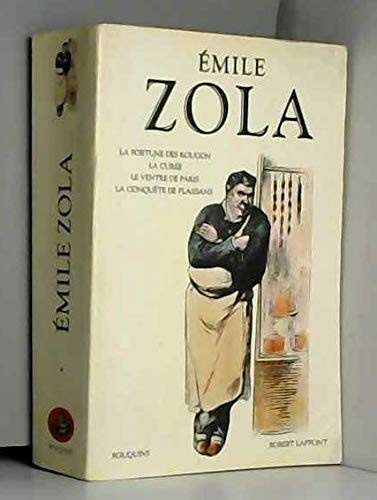
Cover of Les Rougon-Macquart

Les Rougon-Macquart

Émile Zola

4 ideas

  1. Heredity plus milieu determines fate

    Each character is treated as the product of two inputs: a temperament inherited from the ancestral lesion (Tante Dide's nervous instability, Antoine Macquart's alcoholism) and the pressures of a specific social environment. The same bloodline yields a minister, a financier, a painter, a prostitute or a murderer depending on which milieu the inherited disposition meets, so outcome is read as inheritance times circumstance rather than as free choice.

  2. Gervaise's decline in L'Assommoir

    Gervaise Macquart, a laundress in the Goutte-d'Or district of Paris, works her way to owning her own shop. Her roofer husband Coupeau falls from a roof, turns idle during his recovery and begins drinking. The household then slides through debt, gluttony and the return of her former lover Lantier until both die in destitution, Coupeau of delirium tremens and Gervaise of starvation in a hovel under the stairs, the drink shop of the title acting as the engine of their ruin.

  3. Étienne Lantier and the Montsou strike

    In Germinal, Étienne Lantier, Gervaise's son, arrives as a jobless mechanic at the Montsou coalfield and becomes the leader of a miners' strike against the mining company. The strike collapses into hunger, riot and soldiers firing on the crowd, and the anarchist Souvarine sabotages the mine and entombs workers underground. Étienne carries the family's inherited violence, which surfaces when he kills a rival. He leaves defeated, but with the conviction that a revolt is germinating beneath the ground.

  4. Institutions as devouring organisms

    Zola depicts social structures as living bodies with appetites: the mine as a beast (the Voreux) that swallows men, the department store as a machine that grinds down small shopkeepers, Les Halles market as the belly of Paris. Reading an institution this way shifts attention from individual villains to the system's own metabolism. Owners and workers alike are consumed by a structure whose logic of growth and consumption no one controls.

Save and mark ideas in the app