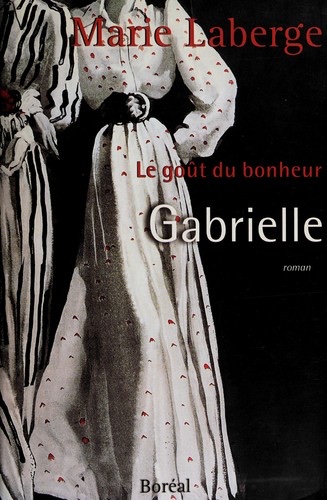
Cover of Le Goût du bonheur

Le Goût du bonheur

Marie Laberge

4 ideas

  1. Gabrielle Miller against the confessional

    In 1930s Québec City, Gabrielle Miller is a bourgeois Catholic wife and mother of a large family who openly enjoys her sexual bond with her husband Edward. She resists clergy who treat conjugal life as a duty to produce children rather than a source of pleasure. Her refusal to accept guilt for desire, while staying inside the Church's social world, is the saga's founding case of a woman reclaiming her body from institutional authority.

  2. Joy as a learned, inherited capacity

    The capacity for happiness is not a temperament but a practice passed down within a family, through a parent who models pleasure, curiosity and appetite for life. In a culture organized around guilt and sacrifice, cultivating that 'taste' is a form of resistance. It is also what lets the next generation survive grief, war and loss without collapsing.

  3. Private defiance precedes public revolution

    Read the decades before a society's visible upheaval through its kitchens and bedrooms rather than its parliaments. Change first appears there, as mothers quietly refusing clerical dictates, daughters choosing work and love over prescribed roles, and families tolerating what institutions condemn. By the time the Quiet Revolution secularizes Québec's institutions, it is ratifying shifts already lived privately over a generation.

  4. Elective kinship through the adopted outsider

    He becomes a pillar of the family and the lifelong confidant of her daughter Adélaïde. Kinship here is defined by chosen loyalty and mutual care rather than lineage, and the outsider, whose difference society would marginalize, often proves the most faithful keeper of the family's bonds.

Save and mark ideas in the app