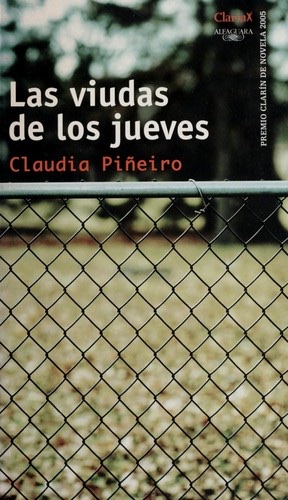
Cover of Thursday Night Widows

Thursday Night Widows

Argentina · 2001

7 ideas

Buy on Amazon

In a gated community outside Buenos Aires, three men are found dead in a swimming pool as Argentina's 2001 economic crisis bears down. Piñeiro turns the mystery toward the residents themselves, where money and appearances hold a privileged world together with increasing strain.

  1. Three men electrocuted in a gated-community pool

    In September 2001, as Argentina's economy collapses, three men from the gated suburb of Altos de la Cascada are found dead in Tano Scaglia's pool after their weekly Thursday-night card game. Their deaths look like an electrical accident.

  2. When a man is worth more dead

    When a man's identity rests entirely on being the provider, losing his income makes his life insurance policy the most valuable thing he still owns. Suicide then looks to him like a financial transaction rather than despair. The disguise of an accident is essential, because it lets the family keep both the money and the respectable story.

  3. Gated walls as appearance-maintenance machines

    A gated community's walls do not mainly keep out crime. They create a closed audience in which status must be constantly performed. Residents who lose their jobs keep paying club fees, keep the maid, and pretend to leave for work each morning, because admitting failure means expulsion from the only social world they have. The pressure to keep up the performance grows exactly as the money to support it disappears.

  4. The real-estate agent's ledger of secrets

    The narrator, Virginia, sells houses inside the community, and every transaction gives her access to what neighbors hide: debts, affairs, violence, forced sales. She records it all in a private notebook. Whoever handles property transfers inside a closed society becomes its unofficial archivist, because housing is where status collapses first and most visibly to anyone who is looking.

  5. Breadwinner worth converts to insurance payout

    When a man's identity rests entirely on providing, financial ruin can lead him to judge himself worth more dead than alive. A life insurance policy becomes the last asset he can deliver. The logic of the provider role, followed to its end, turns the provider's body into the final instrument of provision.

  6. Status communities force concealment of economic ruin

    In a community where belonging is signaled through consumption and appearance, a loss of income is treated as a social disgrace rather than a misfortune. Residents therefore hide it. A man who has lost his job still leaves every morning as if going to work, and families quietly cut back while keeping up visible markers. That concealment isolates each household, so nobody learns how many neighbors are sinking, and help that might have come never does.

  7. The wall that imports what it excludes

    The gated community promises safety by walling out crime, poverty and national instability. But its residents' wealth depends on the same economy the wall pretends to shut out. The barrier cannot stop the collapse. It only delays when residents admit it, so the crisis arrives inside as private catastrophe rather than shared public trouble.

Save ideas and give them a thumbs up or down in the app