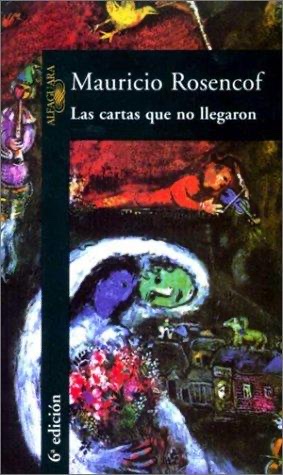
Cover of Las cartas que no llegaron

Las cartas que no llegaron

Mauricio Rosencof

4 ideas

  1. A hostage writes to his absent father

    Mauricio Rosencof, a Tupamaro leader, was one of nine prisoners whom Uruguay's dictatorship held as 'hostages' (rehenes) from the early 1970s until 1985, to be executed if the guerrilla movement resumed operations. He spent roughly eleven years in solitary confinement. Out of that isolation he composed letters to his father, a Polish-Jewish immigrant whose family in Poland stopped writing when they were murdered in the Holocaust. The book sets his cell beside the shtetl as two sites of the same family's persecution, one generation apart.

  2. Silence as the first record of atrocity

    For émigré families, the first evidence of genocide was often not news but the halt of routine mail from relatives left behind. The unanswered letter becomes a record kept in negative. Because it is only an absence, it can be hoped against for years, and the family has no fixed moment in which to begin mourning.

  3. Imagined correspondence as a survival technique

    A prisoner who is denied any real interlocutor can build one by writing to someone absent or dead. Addressing a specific listener keeps language, memory, and a sense of self organized around a relationship rather than around the cell. The letter does not need to be delivered to work. Its value lies in keeping the writer a person who is still speaking to someone.

  4. Persecution rhymes across generations and continents

    The son's imprisonment in Uruguay and the father's lost shtetl are shown as one family history of state violence. In each case people are stripped of names, contact, and voice, and the losses are left undocumented. Linking the two turns private family memory into testimony, and it shows inherited trauma as a pattern that recurs rather than a finished past.

Save and mark ideas in the app