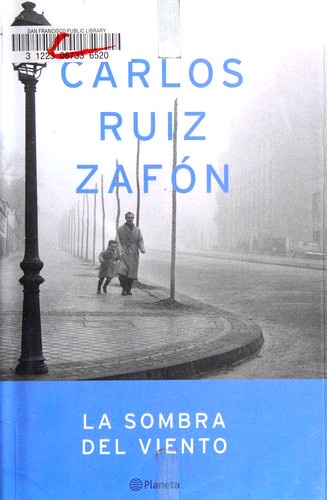
Cover of La sombra del viento

La sombra del viento

Carlos Ruiz Zafón

4 ideas

  1. Carax burns his own books as Laín Coubert

    In 1945 Barcelona, ten-year-old Daniel Sempere adopts Julián Carax's novel from the Cemetery of Forgotten Books and learns that a disfigured man calling himself Laín Coubert, the name of the devil in that novel, has been hunting down and burning every surviving copy. The burner turns out to be Carax himself. Daniel's search, helped by the ex-prisoner Fermín and guided by Nuria Monfort's manuscript, uncovers this history, and Daniel's life comes to mirror Julián's.

  2. Books as custodians of forgotten memory

    The Cemetery of Forgotten Books is a hidden library where each initiate adopts one volume and commits to keeping it alive. The idea is that a book lives only as long as someone remembers it, and that each reader who opens it changes it. Under a regime that erases people and records, private readers become the last archive of what is not officially remembered.

  3. Unhealed personal trauma turns into self-destruction

    A person who survives catastrophic loss but cannot grieve it can turn that grief against the record of their own former self. In the novel, Carax destroys the books that preserved who he was and so becomes the villain of his own fiction. Recovery comes only when another person's love and testimony, here Nuria Monfort's sacrifice and Daniel's search, give the survivor a reason to let the work exist again.

  4. Authoritarian power as licensed personal vendetta

    Read through Inspector Fumero, political repression looks less like ideology in action and more like private resentments given a badge. Fumero serves whichever side is winning and uses state violence to settle a schoolboy jealousy over Penélope. Seen this way, a regime's terror is often individual grudges that the system permits and rewards, rather than a coherent program.

Save and mark ideas in the app