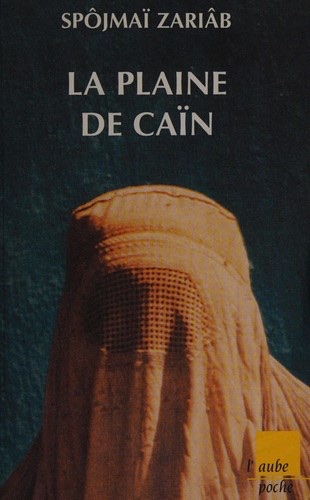
Cover of La plaine de Caïn

La plaine de Caïn

Spôjmaï Zariâb

5 ideas

  1. Kabul woman writing against two oppressors

    During the Soviet-backed communist years in Afghanistan, Spôjmaï Zariâb wrote thirteen short stories that indict both the foreign occupation and the violence Afghan men commit against women under it. The case shows how a writer inside a regime can refuse to side with either the occupier or the domestic resistance, because both reproduce her subjugation.

  2. The household as a second occupied territory

    Read occupation at two scales at once: the foreign army controlling the nation, and the husband, father, or brother controlling the woman within the home. The same mechanisms appear at both levels: seizure of the body, surveillance, silencing, and punishment framed as order. Seen this way, national liberation that leaves the domestic occupation intact is only a partial liberation.

  3. Political violence cascades down to the least powerful

    Humiliation imposed by an occupying power does not stay where it lands. Men stripped of power in the public sphere reassert control in the one place they still command, over women and the home. The result is that occupation does not replace patriarchy but intensifies it, so women carry the war's violence twice.

  4. War as the plain of Cain

    The title invokes Cain, the first fratricide, to recast the Afghan war as brothers killing brothers rather than a clean conflict between nation and invader. Ideology, whether communist or its opponents', works by relabelling kin as enemies, which gives familial murder the look of political duty. The frame shifts moral attention from which side is right to the fact that the dead and the killers belong to the same family.

  5. Short fiction as dissent under censorship

    Under a regime that polices direct statement, short fiction lets a writer deliver an indictment through compression, individual cases, and allegorical framing. It shows one woman or one household rather than arguing a thesis, which makes the critique harder to censor as open opposition. The individual case also makes the critique harder to dismiss, because it presents an experience rather than a position.

Save and mark ideas in the app