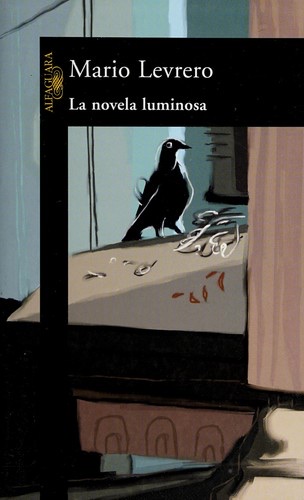
Cover of La novela luminosa

La novela luminosa

Mario Levrero

4 ideas

  1. The Guggenheim year spent not writing

    Around 2000, Levrero received a Guggenheim grant to finish a 'luminous novel' he had abandoned in the 1980s. He spent the year in his Montevideo apartment keeping a daily diary instead, recording all-night sessions of computer solitaire and other games, chronic insomnia, a pair of pigeons on a neighboring rooftop, doctor visits and hypochondriac fears. The diary grew into the bulk of the published book, while the novel it was meant to unlock stayed a set of unfinished fragments.

  2. Narrating the luminous extinguishes its light

    Levrero argues that transcendent experiences resist direct narration. Once they are turned into literary sentences they become ordinary, and the luminosity that made them worth telling disappears. So the harder a writer aims at the extraordinary head-on, the more reliably the writing flattens it.

  3. Avoidance as the actual work

    The diary was meant as a warm-up exercise to reach the 'real' book. Instead it became the book, because recording the daily mechanics of avoidance (distractions, rituals, compulsions) exposes the writer's relation to the work more honestly than the work itself would. On this view, the detour is not a failure of the project but the only route by which it can be approached.

  4. Leisure as precondition, distraction as counterfeit

    Levrero separates true leisure (ocio), an unhurried and receptive state in which the deeper self or 'spirit' can surface, from compulsive time-killing like computer games, which only mimics rest. Distraction fills the empty time that leisure needs, so the would-be writer feels idle yet never reaches the idleness that produces work. The grant bought him the time but could not buy him the state.

Save and mark ideas in the app