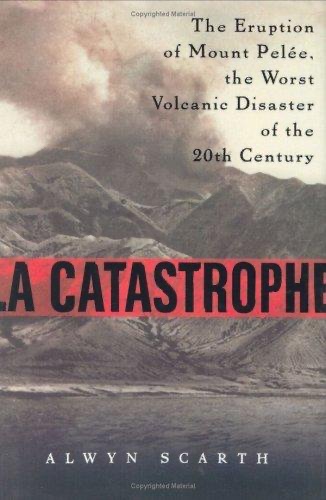
Cover of La Catastrophe

La Catastrophe

Alwyn Scarth

4 ideas

  1. Saint-Pierre destroyed while the election loomed

    In late April and early May 1902, Mont Pelée on French-ruled Martinique showered Saint-Pierre with ash and sulphur fumes, and on 5 May a mudflow buried the Guérin sugar works and killed its workers. A second-round legislative election was due on 11 May, and a hastily convened commission, backed by the local newspaper, declared the city in no danger. Governor Louis Mouttet came to Saint-Pierre to reassure the public. On the morning of 8 May a glowing cloud of gas and ash swept through the city in minutes, killing about 28,000 people, the governor among them, and leaving only a handful of survivors, most famously a prisoner shielded by the thick walls of his cell.

  2. Political deadlines corrupt official risk assessment

    When an institution has a fixed political event to protect, such as an election that requires voters to stay in place, its experts and press are pulled toward reassuring conclusions. The danger is judged by whether acting on it would disrupt the event, not by the evidence itself. Public calm becomes a goal in its own right, so warnings are treated as panic to be managed rather than information to be acted on.

  3. The nuée ardente as unimagined hazard

    The authorities' idea of volcanic danger was built on flowing lava and falling ash, which move slowly or can be sheltered from. That model told them Saint-Pierre had time and could simply wait. What actually killed the city was a pyroclastic density current, a fast, superheated avalanche of gas and debris that the geologist Alfred Lacroix later studied and named the 'nuée ardente.' The lesson is that the worst risk can be the one your model of the hazard does not include, so expert confidence within a wrong model offers no protection.

  4. Escalating precursors absorbed as new normal

    Read a slow-building disaster as a series of warnings, each one explained away because it resembles the last one people survived. Ashfall, fumes, animals fleeing the slopes and a lethal mudflow each reset the baseline of what counts as normal. Because no single sign crossed a clear line for leaving, accumulating evidence produced adaptation instead of evacuation.

Save and mark ideas in the app