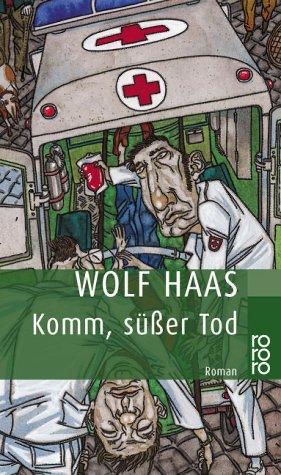
Cover of Komm, süßer Tod

Komm, süßer Tod

Wolf Haas

4 ideas

  1. Ex-cop ambulance driver amid rival services

    The deaths turn out to be entangled in a turf war with the rival Rettungsbund, where crews race to reach emergency calls first. Brenner, an outsider inside the service, uses his cop instincts to trace the deaths back to the competition over patients.

  2. Competition turns patients into contested revenue

    When rival organizations compete for the same emergency calls, getting to the patient first becomes a matter of market share rather than care. That incentive rewards intercepting calls and beating rivals to the scene, and it can make the most vulnerable patients, the old and dying, into assets to be fought over. The service's humanitarian branding hides the fact that its crews behave like rival firms.

  3. Narrator as pub storyteller shaping truth

    The story is told by a chatty narrator who talks like a regular at the bar. He digresses, second-guesses himself, addresses the reader directly and holds back information the way a pub raconteur milks a story. Because the narrator controls what you learn and when, suspense and trust depend on his voice rather than on the plot itself. The reader's sense of who is guilty is always filtered through gossip-like talk.

  4. Gallows humor as professional coping mechanism

    Ambulance crews who handle death every day treat it with flippant, black humor and bureaucratic routine. This shields them emotionally, but it also makes an unusual pattern of deaths easy to miss. The same normalization that lets workers function also gives cover to wrongdoing, because nobody finds one more dead old person remarkable.

Save and mark ideas in the app