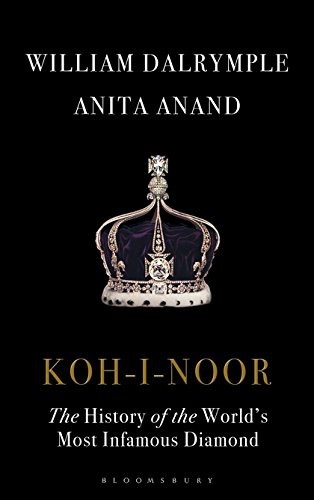
Cover of Koh-i-Noor

Koh-i-Noor

William Dalrymple and Anita Anand

4 ideas

  1. A ten-year-old maharaja signs away the diamond

    In 1849, after the Second Anglo-Sikh War, Governor-General Lord Dalhousie had the boy ruler Duleep Singh sign the Treaty of Lahore, which surrendered the Punjab and specifically required the Koh-i-Noor to be handed to Queen Victoria. In adulthood he tried to reclaim his kingdom and faith. The episode shows how colonial annexation was dressed up as a lawful transfer, using a legal instrument extracted from someone who could not meaningfully consent.

  2. The diamond's legend is largely a later invention

    The book argues that the Koh-i-Noor's early Mughal history cannot be securely documented. Mughal and Indian courts actually prized large coloured stones such as spinels and rubies over colourless diamonds. The stone's supposed ancient lineage and its curse on male wearers were mostly assembled in the nineteenth century from court gossip and British reports. The fame came from its later owners' storytelling rather than from the diamond's early record.

  3. Gem as portable proof of sovereignty

    After Nadir Shah looted it from Delhi in 1739, the Koh-i-Noor functioned as a physical token of legitimate rule, passing from conqueror to conqueror. Holding it signalled the right to rule. Because the symbol was small and movable, it drew violence to whoever held it: rulers and heirs were blinded, tortured and imprisoned to force its surrender. Shah Shuja's family, for example, was held under duress until the stone passed to Ranjit Singh in 1813.

  4. The viewer's expectations reshape the object

    When the Koh-i-Noor was shown at the 1851 Great Exhibition, the British public found it dull because its Indian cut favoured weight and history over sparkle. It was then recut in 1852 to suit European taste for brilliance, shrinking from about 186 carats to roughly 105 and erasing much of its original form. The lens: when an object is taken into a new culture, it is often physically altered to fit that culture's idea of value, destroying the qualities its earlier owners valued.

Save and mark ideas in the app