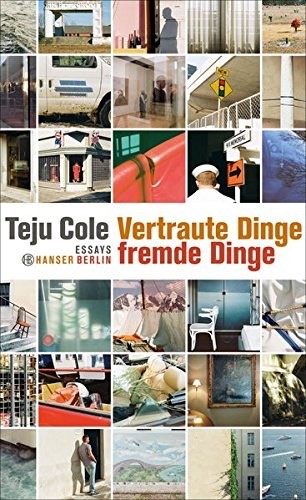
Cover of Known and Strange Things

Known and Strange Things

Teju Cole

5 ideas

  1. Retracing Baldwin's Steps in Leukerbad

    In the early 1950s James Baldwin wrote 'Stranger in the Village' in Leukerbad, a Swiss mountain village where he was reportedly the first Black person many residents had seen, and he concluded that Chartres and Shakespeare belonged to the villagers in a way they could not belong to him. He rejects Baldwin's sense of exclusion from Western culture and claims Bach and the European canon as his rightful inheritance, while noting that the racial dynamics Baldwin described have changed form rather than disappeared.

  2. The White Savior Industrial Complex

    Much Western humanitarian activism toward Africa, typified by the Kony 2012 campaign, is less about justice than about giving privileged people a big emotional experience that validates their privilege. Sentimental rescue narratives reduce complex political problems to good-versus-evil stories that need only outside attention or money. They leave out the local agency of the people involved and the Western policies that helped cause the harm, so the same system that damages people in the morning funds charities in the afternoon.

  3. Technology Calibrated to a Default Whiteness

    As a result, dark skin photographed poorly because of how the system was built, not because of anything in the subject, and Roy DeCarava's rich, shadowed prints of Black life were a deliberate response to this. The general principle is that a supposedly neutral tool carries the norms of whoever set its defaults, and it quietly makes everyone outside that norm harder to see.

  4. Seeing Violent Images Among Mundane Tabs

    This flattens atrocity into content that can be consumed and closed. Cole asks what obligations such images create for viewers and whether repeated viewing bears witness or merely turns Black death into spectacle. The lens shifts attention from what an image shows to the conditions under which it is seen and circulated.

  5. Temporary Blindness of a Photographer

    Facing the possibility of losing sight, he found the damaged eye made him aware of seeing as a fragile, constructed act rather than a given. The episode shows how partial loss of a faculty exposes the machinery of perception that normal functioning hides.

Save and mark ideas in the app