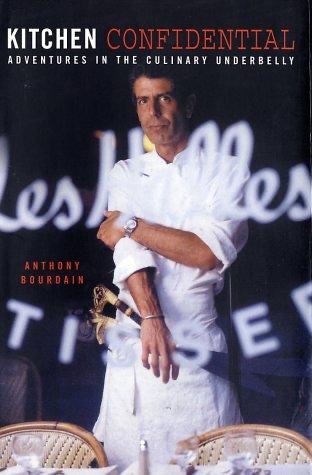
Cover of Kitchen Confidential

Kitchen Confidential

Anthony Bourdain

4 ideas

  1. Provincetown oyster that launched a career

    As a boy on a family trip to France, Bourdain ate a raw oyster straight from a fisherman's boat and felt, for the first time, that food could be an act of daring and pleasure rather than nourishment. Years later, washing dishes at a Provincetown seafood restaurant, he watched the cooks' swagger, appetites and piratical freedom and chose the kitchen as a life. The book offers this as a case of vocation arriving through one sensory shock and a tribe to join, not through a plan or a talent assessment.

  2. Mise en place as operating discipline

    A cook's station is set up before service so that every ingredient, tool and garnish sits in a fixed, reachable place. The rush then becomes pure execution, and no decisions or searching are left for the moment of pressure. A disorganized station signals a disorganized mind, so chefs read a cook's reliability directly from the state of their board and towels.

  3. Menu timing reveals what diners actually get

    What reaches the plate depends on the supply cycle and on kitchen incentives, not on what the menu promises. Fish ordered on Monday is often weekend leftovers because markets are closed Sunday. Brunch and discounted specials are where aging stock gets used up, and well-done steak orders are where the worst cuts go. Knowing how an operation runs lets an outsider predict quality better than its presentation does.

  4. The kitchen crew as pirate meritocracy

    The professional kitchen is a closed society of misfits, ex-cons and immigrants. There, status comes only from showing up, working fast and never letting down the line, and credentials, background and politeness count for nothing. Its brutal hazing, profane banter and fierce loyalty are functional: they filter out anyone who cannot handle the pressure and bind the survivors into a unit that performs every night.

Save and mark ideas in the app