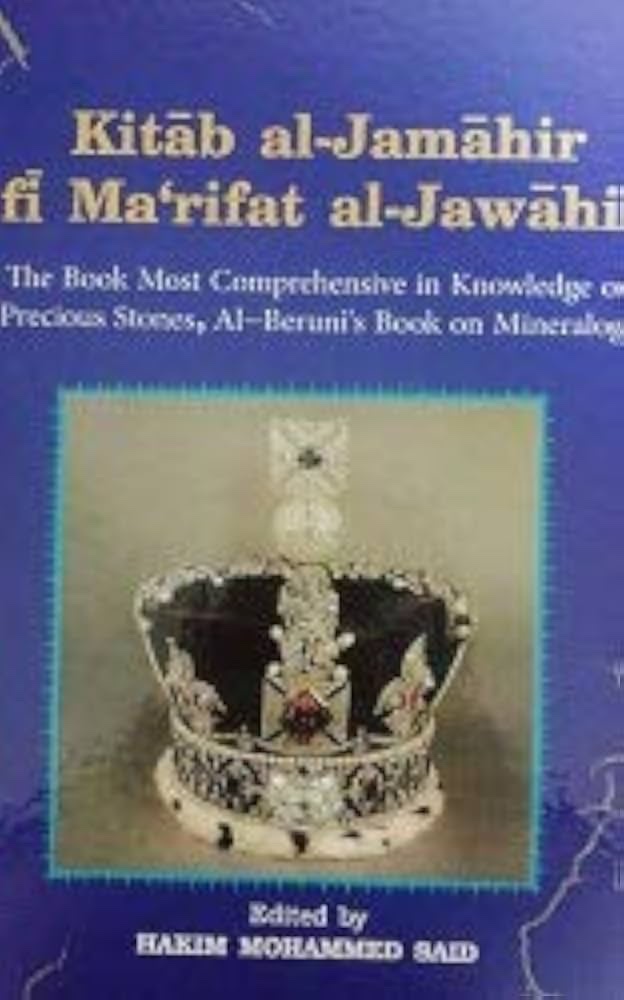
Cover of Kitab al-Jamahir

Kitab al-Jamahir

900–1040

3 ideas

Buy on Amazon

Al-Biruni's treatise on precious stones and metals records each one's origin, specific weight, market price and the frauds used in trading it, drawing on measurement and merchants' testimony.

  1. Specific gravity as fraud detector

    Every substance has a fixed ratio of weight to volume, so a sample of a stone or metal can be checked by comparing its weight against an equal volume of water. Measurement therefore replaces the dealer's eye and the seller's word as the test of what a thing really is.

  2. Price is convention, not intrinsic worth

    The value of gems and precious metals rests on scarcity, fashion and agreement among buyers, not on any usefulness in the thing itself. Prices recorded from merchants move with place, era and the whims of rulers. So a gem's price describes the society trading it more than the stone.

  3. Four-part dossier for traded goods

    Putting physical fact beside market testimony and known deceptions gives a buyer both the truth about the object and a map of how it is misrepresented. Merchants' reports are treated as evidence to be checked against measurement, not as authority.

Save ideas and give them a thumbs up or down in the app