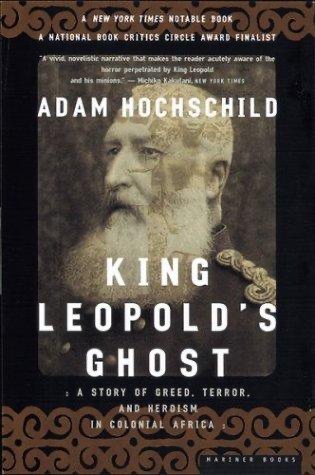
Cover of King Leopold's Ghost

King Leopold's Ghost

4 ideas

Buy on Amazon
  1. Leopold's Privately Owned Congo State

    King Leopold II of Belgium acquired the Congo as his personal possession (not a Belgian colony) in 1885, extracting rubber and ivory through forced labor enforced by a mercenary army that took hostages, severed hands as proof of killings, and presided over population losses estimated at around ten million. He never set foot in the Congo and presented the regime publicly as a humanitarian and anti-slavery enterprise.

  2. Humanitarian branding as cover for extraction

    Leopold built support by funding anti-slavery conferences, geographic societies, and press contacts, framing conquest as a civilizing and anti-slavery mission while the actual operation was coerced resource extraction. The philanthropic language was not incidental; it was the instrument that secured diplomatic recognition and deflected scrutiny for decades.

  3. Statistics obscure, individual testimony moves

    The campaign to expose the Congo gained force not from aggregate death figures but from specific, documented accounts and photographs of mutilated individuals that observers could not dismiss. Hochschild argues that moral outrage at mass atrocity mobilizes when it is anchored to nameable people and verifiable images rather than numbers alone.

  4. Elements of an early human rights movement

    The Congo Reform Association combined investigators who gathered firsthand testimony (E.D. Morel, Roger Casement), eyewitness documentation including photography, mass public meetings, and pressure on governments and shareholders. Hochschild presents this combination of investigation, documentation, publicity, and institutional pressure as a replicable template for exposing hidden abuses.

Save ideas and give them a thumbs up or down in the app